

…As FG Launches Initiative To Save Mothers, Newborns
The latest report on global maternal death rates has reflected that Nigeria now accounts for 29% of global maternal deaths, with local women facing a 1 in 19 lifetime risk of dying from pregnancy-related causes, contrasting to the 1 in 4,900 risk in the world’s most developed nations.
Available data from the ‘2023–24 Nigeria Demographic and Health Survey’ report revealed the worrisome statistics about the high death rate among Nigerian women and the imperative for government to tackle the healthcare crisis.
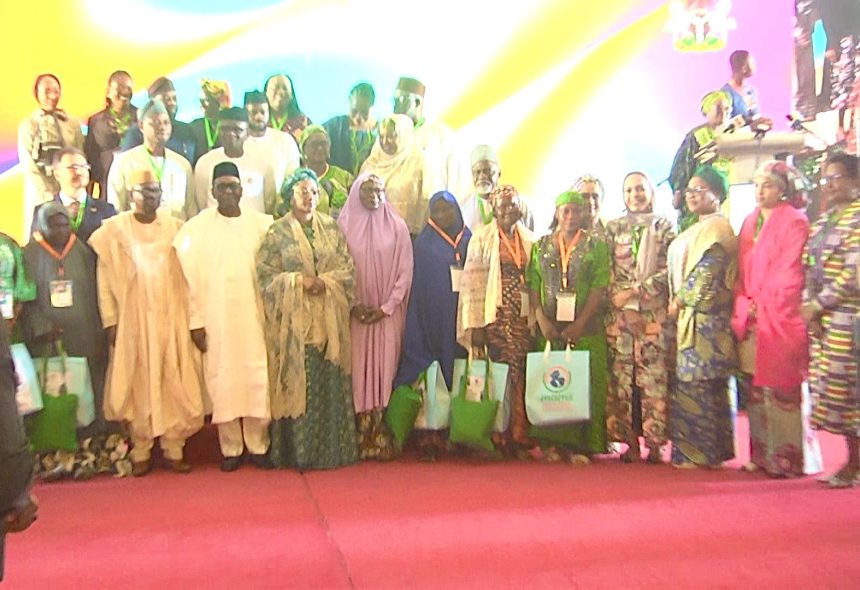
In response to the ugly situation, Nigeria’s First Lady, Sen. Oluremi Tinubu on Monday formally launched the Maternal and Neonatal Mortality Reduction Innovation Initiative (MAMII) at the Presidential Villa to frontally tackle the maternal death problem in the country.
- Advertisement -
Describing the launch of the initiative as representing a step towards ensuring that every Nigerian child has a healthy start in life and that no woman loses her life while giving birth, she explained that the incentive package being launched included a second batch of 215,000 Mama Kits and bags, following the initial distribution of 110,000 kits in 2025, as well as 40,000 maternal food support packs and 40,000 sets of essential newborn clothing.
The First Lady noted that despite ongoing interventions, social, economic, cultural and logistical barriers continued to prevent many women from accessing essential maternal and newborn healthcare services.
She said: “I am informed that the Federal Ministry of Health and Social Welfare intends to extend the distribution of food support packs and essential newborn clothing to additional local government areas identified as having low uptake of MAMII incentives.”
The First Lady expressed optimism that such practical support would encourage less privileged pregnant women to attend antenatal clinics, prepare adequately for delivery and continue receiving essential care after birth.
Speaking at the forum, the Coordinating Minister of Health and Social Welfare, Prof. Muhammad Ali Pate, said the MAMII was established to tackle Nigeria’s persistent maternal mortality crisis because pregnancy is not a disease, but yet many mothers lose their lives in the course of delivering life.
According to the minister, the initiative aims to connect both the supply and demand sides of maternal healthcare — from primary healthcare services, manpower, medical commodities and procedures to making healthcare services affordable and accessible.
Pate disclosed that over 60,000 women had received free caesarean sections and other emergency maternal services through the National Health Insurance Authority (NHIA), in the last two years, while more than 120,000 frontline health workers had been retrained through the National Primary Health Care Development Agency and that more than 3,000 healthcare facilities had been revitalised, while about 1,000 additional facilities were currently undergoing revitalisation.
He expatiated: “Hundreds of primary healthcare centres have been equipped, while thousands have been stocked with medical supplies.
“More than 6,000 women suffering from obstetric fistula have received treatment and empowerment under the government’s emergency obstetric fistula programme”, the minister added.
He linked the government’s maternal nutrition interventions to the First Lady’s Community Food Bank initiative, saying adequate nutrition was essential to developing the human capital needed for national growth.
Giving further details, the Minister of State for Health and Social Welfare, Dr Iziaq Adekunle Salako, explained that MAMII was launched by the Federal Government in November 2024 with an initial target of 172 Local Government Areas across 33 states, representing about 20 per cent of Nigeria’s LGAs but accounting for 55 per cent of maternal deaths.
He explained that the initiative aimed to reduce maternal mortality by 30 per cent and neonatal mortality by 20 per cent in the targeted areas by 2028 as well as provide free, timely and comprehensive care to 2.9 million pregnant women.
On the achievements recorded so far under MAMII, the minister disclosed that the initiative had been implemented in states including Bauchi, Borno, Kaduna, Kano, Katsina and Ogun just as more than 250 health facilities are currently implementing the programme, while over 32,000 women and 1,700 newborns had directly benefited from emergency obstetric and neonatal care.
Salako maintained that through NEMSAS, nearly 79,000 people had been transported to healthcare, with about 60 per cent being pregnant women, and commended the World Health Organization, WHO, UNICEF, UNFPA, the Global Financing Facility and USAID, among other development partners, for strengthening Nigeria’s healthcare system.
The Country Representative of the World Health Organisation (WHO), Dr. Pavel Ursu, said the success of the MAMII intervention would ultimately be measured by its ability to improve women’s access to quality healthcare and save lives.
He explained that primary healthcare remained critical to the success of the initiative because it would bring life-saving services closer to families, builds trust and connects communities to the wider healthcare system.
The medical expert urged health authorities to make better use of data to identify gaps and direct resources to communities with the greatest needs.
Dr. Pavel Ursu, said the success of the MAMII intervention would ultimately be measured by its ability to improve women’s access to quality healthcare and save lives.
He explained that primary healthcare remained critical to the success of the initiative because it would bring life-saving services closer to families, builds trust and connects communities to the wider healthcare system.
The medical expert urged health authorities to make better use of data to identify gaps and direct resources to communities with the greatest needs.