

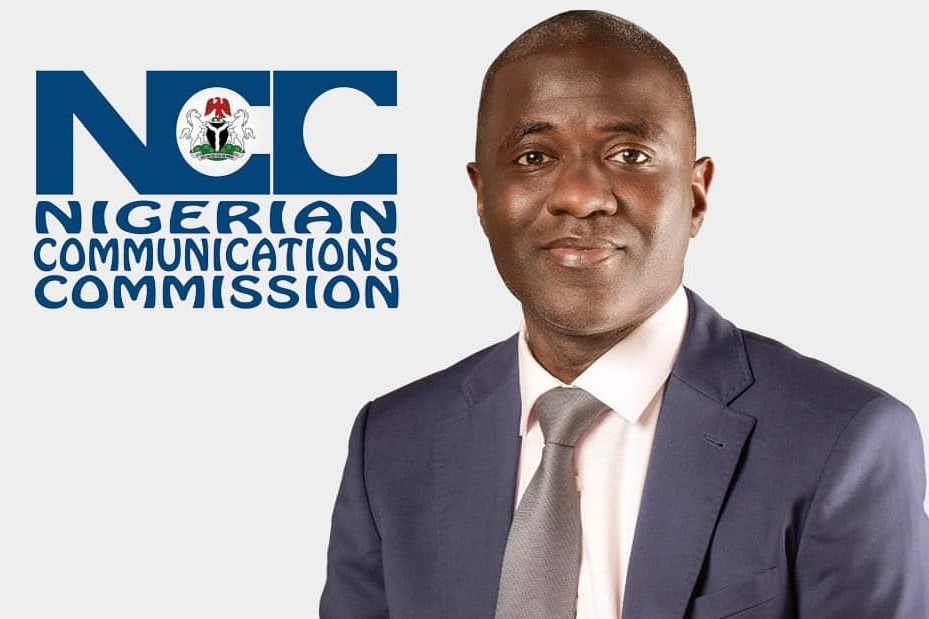
The Nigerian Communications Commission (NCC) on Monday hinted that it had commenced a review of the National Telecommunications Policy 2000 (NTP) as part of its regulatory initiatives to align Nigeria’s telecoms policy framework with best standards in the face rapidly evolving technological innovation and other market realities globally.
The Commission announced the commencement of the review process with the release of a consultation paper seeking stakeholders’ inputs into the proposed modifications to the telecom industry’s policy.
It hinged the latest move on the imperative of updating Nigeria’s telecommunications policy to reflect current dynamics in digital services, internet governance, satellite communications, broadband expansion and universal access, while sustaining the sector’s role as a key driver of economic growth.
While noting that the National Telecommunications Policy (NTP) 2000 is adopted in response to an earlier framework that had become obsolete, the NCC maintained that the NTP replaced the 1998 policy and introduced full market liberalisation, stakeholder consultation and a unified regulatory framework under the commission’s mandate.
- Advertisement -
It recalled that the NTP 2000 marked a decisive shift from state controlled telecoms industry to a liberalized, competitive and market-driven growth.
The NCC clarified: “Prior to the liberalisation, midwifed by the NTP, Nigeria’s telecommunications sector was dominated by the Nigerian Telecommunications Limited (NITEL), which was a government-owned monopoly.
“NITEL was reputably characterized by obsolete equipment, poor quality of service and low teledensity”, it added.
The Commission noted that just as the 1998 policy became outdated based on global technological changes, the 2000 policy now required a comprehensive overhaul to address today’s realities, including platform-driven digital services, broadband-dependent applications and emerging non terrestrial networks.
Specifically, in its latest review plan, the Commission is proposing targeted updates to several chapters of the policy.
For instance, it confirmed that Chapter Seven on the Internet was set for revision to accommodate online safety, deepen internet exchange protocols and provide clearer policy direction on content moderation, online platforms and digital services operating within Nigeria.
Similarly, it disclosed that Chapter Eight on Satellite Communications was also slated for a comprehensive review to establish a modern policy framework for satellite harmonisation, upper and lower stream service provisioning and coexistence between terrestrial and non-terrestrial networks.
The NCC clarified this would include clearer spectrum mapping to improve service quality and cost effective universal connectivity.
In addition, it stated that Chapter Ten on Financing and Funding will be reviewed to address monetary and fiscal support needed to stimulate sector growth, especially in the context of ongoing tax and fiscal reforms.
Also, the NCC is also seeking stakeholder input on policy measures to tackle persistent challenges such as multiple taxation and overlapping regulations.
Apart from the revisions to existing chapters, the commission is proposing a new chapter focused on broadband objectives, protection of critical national communications infrastructure, harmonisation of Right of Way (RoW) charges at all tiers of government and the introduction of a one stop permitting process for telecom infrastructure deployment.
It would be recalled that the formulation of the NTP 2000 led to the licensing of Mobile Network Operators (MNOs) in 2001 and 2002 with the MTN Nigeria and Airtel Nigeria being the first operators in the country.
To consolidate the gains of the telecoms industry policy 2000, the enactment of the Nigerian Communications Act 2003 followed, thereby providing constitutional roadmap for the rapid transformation of the industry.
Since then, the NCC has given all that it required in terms of regulatory guidelines and policies to transform the nation’s telecoms industry as a leader in Sub-Saharan Africa (SSA) by attracting local and foreign direct investments (FDIs) into it and by implication, improving its contributions to the nation’s GDP.