

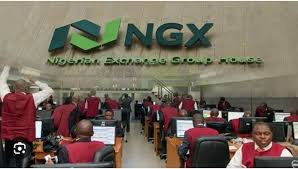
The Nigerian equities market on Wednesday extended its upward trajectory, with the All-Share Index (ASI) gaining 0.28%, while market capitalisation rose by 0.30% to settle at N130.40 trillion, translating to an estimated gain of N389.55 billion in investors’ wealth.
Data from the Nigerian Exchange Group on the trading session indicated that the divergence between the performance NGX ASI and the increase in total market capitalization was primarily due to the listing of Access Holdings Plc’s additional 1,057,958,025 ordinary shares for investors; subscription.
However, the data reflected that despite the positive close, the market sentiment remained weak, as reflected by a weak market breadth of 0.69x with 22 gainers compared to 32 losers, suggesting that the day’s gains were largely driven by select blue chip stocks rather than broad-based buying interest.
According to the NGX, the sectoral performance chart showed that the Oil & Gas Index led the gainers, advancing by 2.11% based on strong buying interest in SEPLAT while the Banking Index gained 1.79%, based on price appreciation in ZENITHBANK, GTCO, and FIDELITYBK.
- Advertisement -
Conversely, the Consumer Goods Index significantly declined, dipping by 1.07% due to losses in CADBURY, PZ, and INTBREW, followed by the Industrial Goods Index which also dipped by 0.19%, weighed down by lower prices of WAPCO and CUTIX shares, while the Insurance Index dropped lower by 0.36% owing to losses in MANSARD, AIICO, and LINKASSURE, despite gains in UNIVINSURE.
Investment analysts at Bancorp Securities Limited noted that from a technical standpoint, the ASI at 202,585.54 points remained above its 7-day (201,528.05), 20-day (199,946.84), and 50-day (188,754.14) moving averages, indicating that the broader bullish trend remains intact.
However, the experts maintained that the gradually narrowing margins between the index and its short-term 7-day and 20-day moving averages suggested potential near-term consolidation.




