

…As Statistician-General Seeks Commitment To NBS’ New RSA Mantra
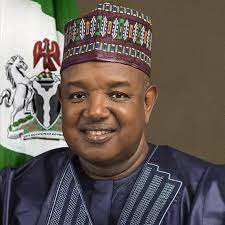
The Minister of Planning and Economic Development, Sen. Abubakar Bagudu, has restated the commitment of the Federal Government to sustainable funding of the nation’s statistical system in view of the unquantifiable benefits to broad-based and inclusive development of the country.
The minister, who gave this assurance in his remarks during the launching of the ‘Power of Data High Impact Initiative in Nigeria’ and the National Strategy for the Development of Statistics (NSDS) 2024 – 2028 in Abuja, explained that the documents represented the present administration’s vision and commitment to a future where every policy, every investment, and every decision is built on the foundation of reliable, timely, and credible data.
According to him, the strategic vision for this roadmap, conceived by the National Bureau of Statistics (NBS), working in close collaboration with critical partners and stakeholders, is fully integrated with the NSDS 2024–2028 and both documents will now serve as the blueprint for the development of the nation’s national statistical system over the next four to five years.
- Advertisement -
Bagudu, who spoke on the reforms of the President Bola Tinubu-led administration since 2023, particularly on the fuel subsidy removal, noted that the implementation of the sundry reforms had been associated with some hardships, which had been outweighed by the socioeconomic benefits for all.
The minister explained: “While the government recognises these economic gains, we are also mindful of the fact that these things take some time to pass through for citizens to feel it in their daily lives. So, it is not only crucial that we stay the course to ensure we reap the full gains of these reforms, but it is equally essential that every decision we make is guided by statistical evidence. This will guarantee the full realisation of the outcomes we expected and planned for when these difficult decisions were taken.”
He pointed out that the global evidence remained overwhelming as investing in a modern statistical system had become one of the highest-return public investments, adding that analysis shows an average return of US$32 per dollar invested in data systems.
Bagudu maintained that through the Power of Data (PoD) Roadmap and the NSDS, the present administration was committing to modernising Nigeria’s statistical system through investment in the system’s data infrastructure, including hardware and software, to ensure its transformation is driven by technology and innovation.
This is even as he hinted that the Federal Government would be significantly investing in human resources, ensuring the training and equipping staff with the requisite skills and expertise to man a modern statistical system.
Bagudu assured that more importantly, the government would invest in enhancing public-sector understanding and literacy in data and statistics to encourage their application, adding that by doing all of these is the least that is expected of the present administration in order to meet the aspirations of Nigerians for a better life and deliver the government’s priorities under the Renewed Hope Agenda.
He commended the National Bureau of Statistics (NBS) and its partners for producing the strategic documents and charged the statistics agency to take the documents and disseminate and sensitise all relevant stakeholders adequately so that each is aware of their roles and responsibilities in the implementation of the researched works.
Earlier in his welcome address at the event, the Statistician-General of the Federation/Chief Executive Officer of the NBS, Prince Adeyemi Adeniran, said that in addition to the launch of the two documents, the statistics agency would also release the latest update to the Sustainable Development Goals (SDG) Tracking Exercise, providing updates on over 200 SDG-related indicators for 2024.
He described the launch of the research works as a major milestone in the development of the nation’s statistical system, expressing the excitement of the Bureau to unveil its vision for the statistical system, along with the roles and responsibilities of each stakeholder, and the activities it planned to undertake to realise these goals.
He explained that the PoD remained one of the 12 United Nations High Impact Initiatives, launched by the United Nations Deputy Secretary-General, Amina Mohammed, on the sidelines of the United Nations General Assembly (UNGA) in September 2023, aimed at speeding up progress towards achievement of the Sustainable Development Goals (SDGs).
According to him, the PoD aims to mobilise investment and political backing for national data systems by galvanising top-level leadership and fostering unified support from the UN Country Team, World Bank, other development partners, civil society, and the private sector.
Adeniran explained that Nigeria aligned with the initiative through the National Bureau of Statistics (NBS) and the Office of the Senior Special Assistant to the President on SDGs in 2024, adding that the launch of the PoD collaborative efforts had been made to develop a comprehensive roadmap for operationalising the initiative in Nigeria.
He disclosed that with the support and collaboration of partners and stakeholders such as the OSSAP-SDGs, NITDA, State Bureaus of Statistics, UN-RC, UNICEF, World Bank, and UNDP, a PoD Roadmap had been developed with specific roles, responsibilities, and activities for operationalising the Power of Data Initiative in Nigeria
The Statistician-General noted that the PoD Roadmap document closely aligned in principle and vision with the third National Strategy for the Development of Statistics (NSDS 2024–2025). The document identifies seven strategic pillars through which activities and programmes will be designed to achieve the objectives of the Power of Data, listing the strategic pillars as including Leadership, Governance and Coordination; Partnerships; Data Infrastructure and Standards; Sustainable Financing and Resource Mobilisation; Capacity Building for Data Production and Use; Data Production, Access and Use; and Monitoring, Evaluation and Learning (MEL)
On the other hand, Adeniran explained that the NSDS 2024–2028 was the third and most recent instalment of our efforts as the Coordinator of the National Statistical System in the country to modernise the system and position it to unlock data dividends for sustainable development in the country.
He recalled that the successful implementation of the NSDS–1 (2010–2014) and NSDS-2 (2017–2021) achieved notable successes such as establishing over 30 independent sub-national statistics bureaus, introducing and institutionalising electronic data collection, and producing and publishing record-breaking statistical products across the system, amounting to over 600 annually.
The Statistician-General described the process of developing the new NSDS document as by far the most comprehensive, inclusive, and strategic process the Bureau has ever undertaken as consultation on it with stakeholders from public and private sectors, civil society, academia, and development partners was unparalleled.
While noting that all the initiative on the NSDS is aimed to create a shared vision for the Nigerian Statistical System, a modern system built on a strong foundation and capable of supporting evidence-based governance at all levels within the country, Adeniran maintained that the NSDS 2024-2028 was an expression of the NBS vision for a transformed and resilient statistical system, driven by technology and able to meet the data needs of all users, especially policymakers.
He explained: “With the alignment of both the Power of Data and NSDS, implementation becomes easier and seamless. The activities carried out under the Power of Data roadmap will simultaneously meet the objectives of the NSDS and vice versa. The simultaneous launch of both documents highlights this point, and we are very pleased with this outcome.”
To achieve the broad objectives of the PoD and NSDS initiatives, Adeniran appealed to stakeholders in the nation’s statistical system to be committed to the implementation of the NBS’ new RSA mantra, which implies Recording information and records accurately and appropriately; Sharing information and records you hold and granting necessary access to that information; and Applying evidence consistently in our work processes, including designing and managing programmes and activities.
He expressed optimism that by adopting this mindset and “making these small adjustments to our work processes, we will observe a significant impact on our development results and a greater impact on citizens’ lives.”