

The Federal Government has commenced initiatives aimed at streamlining over 270 taxes, levies, and statutory charges in Nigeria’s oil and gas industry.
Already, the government has engaged a consulting firm, PwC Nigeria, to undertake an international benchmarking of the country’s fiscal regime with a view to mitigating current burden on operators and attracting new investments to the hydrocarbon resources industry.
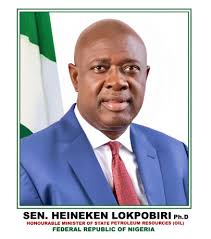
The Minister of State for Petroleum Resources (Oil), Heineken Lokpobiri, made this disclosure on Tuesday while responding to concerns raised by indigenous oil producers during the opening ceremony of the 2026 NOG Energy Week in Abuja.
The minister’s clarification was made after the Chairman of the Independent Petroleum Producers Group (IPPG), Adegbite Falade, flawed the multiplicity of taxes in the sector, describing the oil and gas industry as perhaps the most taxed and levied globally
- Advertisement -
In view of the worrisome fiscal regime, Falade urged the Federal Government to harmonise the various taxes and levies in the industry, pointing out that the fiscal burden is undermining the competitiveness of operators, discouraging investment and posing serious risks to the viability of mature oil assets.
Reacting to the concerns by the IPPG chairman, Lokpobiri agreed that the complaints raised by him were valid but said the government had already initiated steps to frontally address them.
The minister explained: “When the Chairman of IPPG was talking, he made mention of the multiplicity of fees and rents. It’s been a major concern that Nigeria has over 270 fees, taxes and rents in this sector. It is true. But that doesn’t mean we’re not doing something about it.
“Our attention was drawn by OPTS to this matter. And since then, we’ve had several engagements, and I’m happy to announce to you that part of the steps we’ve taken is to commission PwC to do a global benchmarking. IPPG, together with NUPRC, came together under my directive to commission PwC to do a global benchmarking,” he added.
Lokpobiri further clarified that while the over 270 taxes and levies appears alarming, many of the charges involved insignificant amounts but still require operators to go through sundry administrative processes.
He noted that sometimes when you hear that you have 270 taxes and levies, the amount may be small while some could be cents, querying that “why do you take the same paperwork to pay $1m as you want to pay one cent?”
The minister said that “from the report I got from OPTS, they said, ‘Look, even the volume of fees they want to pay for the legal processing is three cents, five cents, or one dollar. Why don’t we group all together? If I’m paying, can’t I pay everything once instead of making the company process 270 invoices?”
Lokpobiri expressed optimism the fiscal streamlining exercise would determine how Nigeria compared with other oil-producing jurisdictions and guide government’s reforms aimed at making Nigeria’s petroleum industry globally competitive.




