

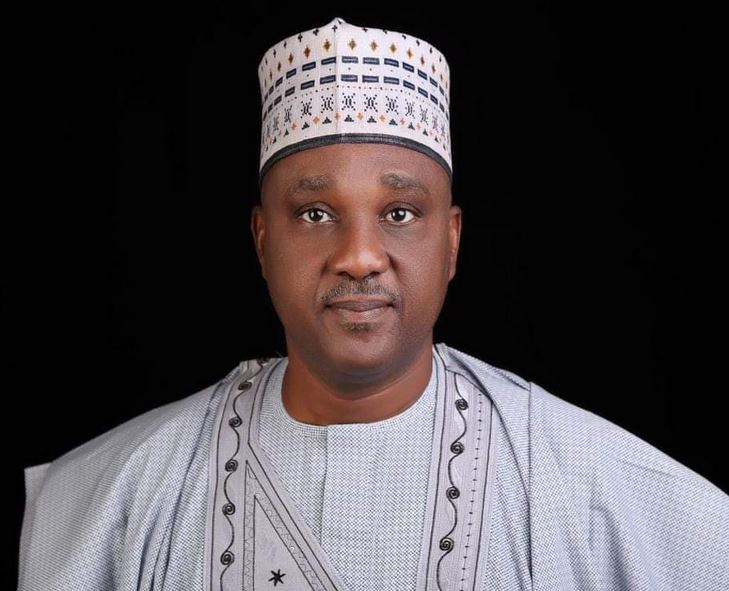
The Speaker of the House of Representatives, Hon, Tajudeen Abbas, has advocated the need for stronger corporate accountability and effective legislative oversight of the Nigerian National Petroleum Company Limited (NNPCL), stressing that the state-owned oil company’s commercial autonomy must be matched with responsibility.
Abbas, who made this remark at a three-day retreat on ‘Petroleum Industry Act Implementation: The PIA, Corporate Governance and Legislative Oversight’ organised by NNPCL, in collaboration with the Office of the Speaker in Abuja, maintained that the successful implementation of the Petroleum Industry Act 2021 enacted to reform Nigeria’s oil and gas sector, would depend not merely on its legal provisions but on the effectiveness of its implementation and the tangible benefits to Nigerians.
Represented at the forum by the Green Chambers’ Leader, Hon. Julius Ihonvbere, the speaker described the PIA 2021 as one of the country’s most consequential economic laws, enacted to ensure a more transparent, commercially viable, accountable and investment-friendly petroleum industry.
The lawmaker explained that five years after its enactment, it had become imperative for stakeholders to assess the extent to which the promises of the legislation had translated into practical results.
- Advertisement -
Abbas said the Act’s provisions, including the transformation of the corporation into NNPC Ltd, the establishment of regulatory institutions and the introduction of a framework for host community development, were intended to address longstanding challenges in the sector, stressing that the passage of a reform law is not the same as the successful implementation of that reform.
He pointed out that the transition of NNPCL into a commercially-oriented company was expected to improve operational efficiency, attract investment and create greater value from Nigeria’s petroleum resources.
The Speaker clarified: “But commercial autonomy must be accompanied by corporate accountability. The freedom to make commercial decisions must go hand in hand with responsibility for their consequences.”
The lawmaker listed production constraints, crude oil theft, pipeline vandalism, infrastructure deficiencies, investment uncertainty and regulatory bottlenecks as some of the major challenges confronting the sector.
Abbas also spoke on the need for adequate crude oil supplies to domestic refineries without undermining the commercial viability of upstream operations, adding that unlocking the gas resources potential requires sustained investment in infrastructure, appropriate commercial arrangements and regulatory certainty.
He further explained that the challenges cannot be addressed by legislative actions alone as they required consistent implementation, institutional coordination, credible regulatory enforcement and investor confidence.
The lawmaker charged participants at the forum to critically examine whether or not NNPCL’s corporate structure was delivering the transparency, efficiency and commercial discipline envisaged by the PIA, as well as identify governance gaps requiring legislative or institutional attention, among others.
Specifically, Abbas said the PIA’s success should be measured by increased production, greater investment, improved energy security, stronger domestic refining, enhanced revenue generation, employment opportunities and tangible benefits to Nigerians, particularly communities hosting petroleum operations.
He stressed: “Ultimately, the petroleum industry must work for the Nigerian people. That is the larger public purpose that must guide our collective efforts.”
In his goodwill message at the event, the Chairman, House of Representatives Public Accounts Committee, Hon. Bamidele Salam, advocated the need for a review of the implementation of the PIA, five years after its enactment, to identify gaps and improve its effectiveness.
The lawmaker said the assessment should go beyond the oil and gas sector to examine how effectively the important legislation had been implemented.
Similarly, the representative of the Chairman, House Committee on Petroleum Resources (Midstream), Hon. Lanre Okunlola, said the transformation of NNPCL must be measured by tangible improvements in the sector as the PIA was designed to improve corporate governance, attract investment, increase private sector participation, enhance operational efficiency and promote the development of host communities.
Also, the Chief Executive Officer of 3 Streams Synergy Ltd, Doyin Adelabu, in his remarks, advocated the need for stronger institutional collaboration and accountability to ensure that the PIA 2021 delivered its intended benefits to Nigerians.