

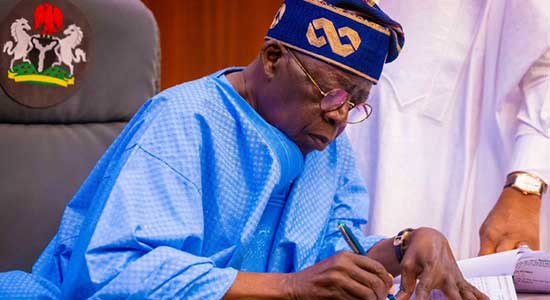
President Bola Tinubu has announced the ‘Nigeria First Policy’, an initiative aimed at prioritising local industries in government procurement across all Ministries, Departments, and Agencies (MDAs).
The policy also seeks to curb reliance on foreign goods and services, promote homegrown solutions, and enhance domestic manufacturing capacity.
Tinubu, who announced the policy as a key component of his administration’s Renewed Hope Agenda, maintained that contractors would no longer act as intermediaries for foreign products while local factories remained not patronized or under-utilised.
According to him, in cases where local supply is insufficient, contracts will be structured to foster technology transfer, local production, and skills development.
- Advertisement -
To ensure effective implementation of the policy, the President issued a series of orders to ensure the policy’s swift implementation. For instance, the Bureau of Public Procurement (BPP) has been mandated to revise its procurement guidelines to prioritise locally made goods.
In addition, a “Local Content Compliance Framework” will be established, alongside a register of high-quality Nigerian manufacturers and service providers regularly engaged by the Federal Government even as the BPP will deploy its procurement officers to MDAs to ensure efficiency and compliance with the policu.
Similarly, the MDAs have been instructed to halt procurement of foreign goods or services available locally unless justified and approved with a written waiver from the BPP, and where no viable local option exists, contracts must include provisions for building local capacity, such as technology transfer or skills development.
Citing the Sugar Master Plan as an example, Tinubu maintained that quota allocations should consider participants’ investments in backward integration and compliance with the plan.
Under the policy’s procurement terms, the President directed all MDAs to conduct immediate audits of their procurement plans and submit revised versions aligned with the new directives, warning that breaches will result in severe consequences, including contract cancellations and disciplinary action against responsible officers.
The Nigeria First Policy is expected to revitalise domestic industries, create jobs, and reduce Nigeria’s dependence on imports. By prioritising local manufacturers and service providers, the government aims to stimulate economic growth and foster self-reliance.
The President said: “This is a transformative step towards building a stronger, more resilient Nigeria. Our industries have the potential to compete globally, and this policy ensures they are given the opportunity to thrive.”
Industrialists and other development experts are optimistic that the implementation of the policy will boost the Nigerian manufacturing sector, especially its contributions to the Gross Domestic Product (GDP), among other benefits.