

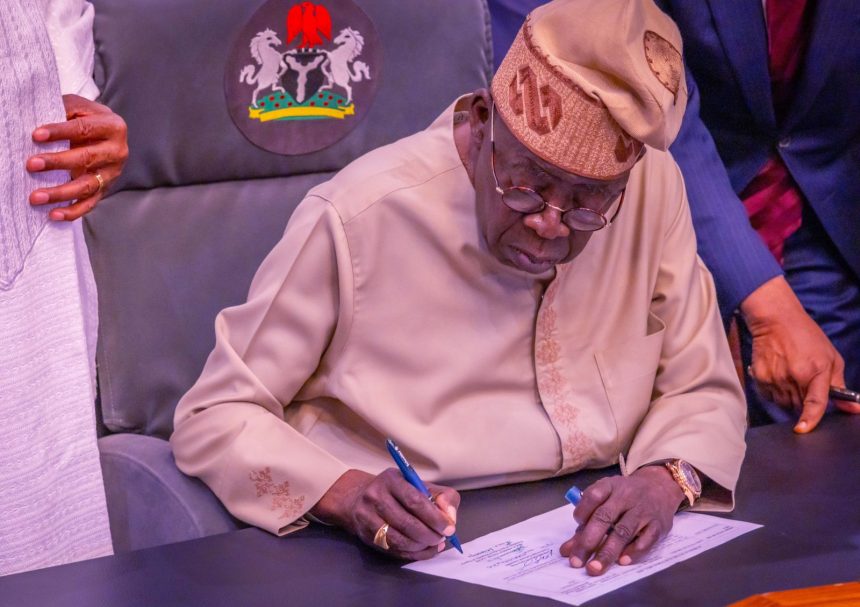
President Bola Tinubu has signed the Nigerian Ports Economic Regulatory Agency (NPERA) Bill 2026, which now paves the way for the establishment of a dedicated economic regulator for the nation’s ports.
empowers the Nigerian Shippers Council (NSC) with more regulatory powers on ports operations in the country.
The Executive Secretary of the NSC, Dr Pius Akutah, confirmed the signing of the bill by the President in his Facebook post.
In the post, the NSC boss stated: “Nigerian Port Economic Regulatory Agency Act, 2026. Thank you Mr. President for making it a reality,”
- Advertisement -
It would be recalled that the efforts to get the bill passed started over a decade ago when the draft legislation was present to the old National Assembly for passage.
The Bill, formerly titled the ‘Nigeria Shipping and Port Economic Regulatory Agency Bill’, provides for the establishment of an independent body charged with the economic regulation of port services in the country.
Based on its provisions, the main purpose of the bill is to separate the commercial and economic oversight of ports from the operational and safety mandate being exercised by the Nigerian Ports Authority (NPA).
With the signing of the bill now by the President, the new legislation has repealed the Nigerian Shippers’ Council Act (Cap N133, Laws of the Federation of Nigeria) and transferred its regulatory functions to the newly created agency.
The scope of the NPERA law extends to tariff regulation, licensing of port service providers, competition monitoring, consumer (shipper) protection and dispute resolution.
The NPERA Act 2026 aligns Nigeria with international best practice in which port economic regulation is separated from port operations, a model adopted in jurisdictions such as the United Kingdom, South Africa and Australia.
It would be recalled the Senate had on April 28 this year passed the NPERA Bill, a legislative action the remained one of the most significant in the nation’s maritime regulatory reforms in over a decade.




