

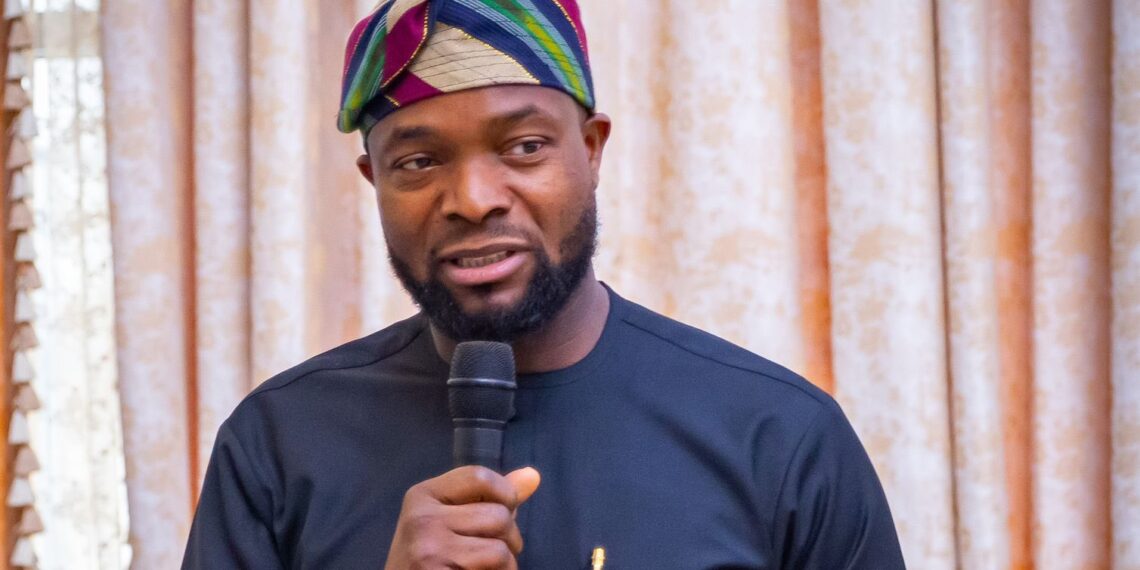
As the global community, particularly development experts and futuristic leaders continue to explore opportunities of Artificial Intelligence (AI) for sustainable development, Nigeria’s Minister of Communications, Innovation and Digital Economy, Dr. Bosun Tijani, has charged African leaders to collaborate, invest, and take defining decisions that will ensure that Africa shapes, not follows, the future of the technological innovation.
The minister gave the advice in his address to global leaders from around the world on Africa’s digital future at the GITEX NIGERIA Government Leadership & AI Summit which opened on Monday in Abuja.
The GITEX NIGERIA maiden event, organised by KAOUN International, the global organiser of GITEX events and fully championed by President Bola Tinubu, is supported by the Federal Ministry of Communications, Innovation and Digital Economy in collaboration with the National Information Technology Development Agency (NITDA).
Tijani, in his first public appearance at the forum since being named alongside Sam Altman and Jensen Huang in TIME magazine’s most influential people in AI 2025, cited emerging developments in the global space on the massive investments and adoption of AI by development countries to justify his call on African leaders to promote all initiatives, including policies and investments, in order not to be left behind in the race for AI adoption across the broad spectrum of governance.
- Advertisement -
He said: “Across the world, nations are harnessing AI to automate processes, analyse data, and optimise resources in ways we could not imagine a decade ago. While others internationally grow more productive and drive unprecedented cross-sector efficiencies, parts of our own economies risk losing competitiveness if we fail to act.
“Those ahead will accelerate; those behind will fall further. Africa must not treat AI as an afterthought and be a consumer-centric continent importing food, services, and innovation; we must produce, lead, and innovate. That is why AI must sit at the very centre of our strategy. As leaders, we must collaborate, invest, and take defining decisions that ensure Africa shapes – not follows – the future of artificial intelligence”, the minister added.
Speaking on the indispensability of AI in Nigeria’s digital future, Director-General/CEO of National Information Technology Development Agency (NITDA), Mr. Kashifu Abdullahi Inuwa, highlighted its projected global economic value and the imperative of optimally exploring its benefits by the Nigerian and other African nations.
The NITDA boss clarified: “We stand on the cusp of a new industrial revolution powered by AI – one where tasks are automated, diseases are cured, and deeper human connections are created. Epoch AI projects automation could grow the world economy by 20%, doubling output within five years.
“This emphasises that no nation can afford to be left behind in this revolution, for those who lead in AI will shape the future. To benefit fully, we must build capacity across policy, infrastructure, computing, and above all, human capital
“In Nigeria, we are acting on this promise through initiatives such as training three million tech talents, embedding digital literacy across our society, and weaving digital skills into formal education. This AI era is not just about technology – it is about talent, and talent, when nurtured, empowered, and digitally fluent, will define our progress and position us to be a regional and global leader in this revolution”, Inuwa stressed.
In his keynote address at the event, Governor of Lagos State, Babajide Sanwo-Olu, said the GITEX NIGERIA event provided a unique opportunity to define the nation’s place in the future of artificial intelligence.
The Governor said: “With our vibrant, youthful population and a proven track record of attracting significant investment, Lagos is not just ambitious—we are a resilient state actively building the digital infrastructure and scaling the startups needed to turn policy into progress.
“This is a moment for global tech leaders to see Africa not merely as a market, but as a co-creator in this revolution. By providing the enabling framework, we can harness AI to address our most pressing challenges and lead our people out of economic hardship”, Sanwo-Olu added.




