

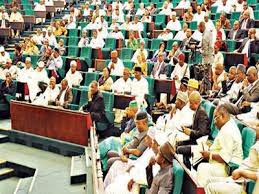
The House of Representatives has advised the Federal Government to discontinue approvals of applications for divestment by International Oil Companies (IOCs) until they fulfil their environmental and social obligations in the oil producing Niger Delta region.
The decision of the lower chamber of the National Assembly was sequel to the adoption of a motion of urgent public importance moved by the House Minority Leader, Hon. Kingsley Chinda, during Thursday’s plenary
Moving the motion, the lawmaker maintained that independent assessments, including those by the United Nations Environment Programme (UNEP) and the Bayelsa State Oil and Environment Commission, contained the devastating environmental and health impacts of oil exploration in the Niger Delta region, especially on contaminated water sources, soil infertility, loss of biodiversity, and public health emergencies.
Similarly, the House Minority Leader recalled that recently, the Nigerian Upstream Petroleum Regulatory Commission (NUPRC) rejected one of the IOC’s (Shell Petroleum Development Company Ltd’s) divestment application, citing failure to address environmental liabilities and concerns about the Capacity of the Renaissance Consortium to manage the assets effectively as its reasons for rejecting the request.
- Advertisement -
The lawmaker said: “The House is aware that past divestments by IOCs, such as the sale of assets in Nembe to Aiteo, Exxon Mobil’s transfers, and ENI/AGIP’s sales to Oando, have left communities with unresolved pollution, worsened environmental degradation, and increased social unrest.”
“The House is concerned that approving Shell’s or Total Energies’ divestment requests without addressing these historical and ongoing liabilities risks undermining Nigeria’s regulatory independence, transferring corporate responsibilities to the Nigerian state, and signaling impunity for environmental crimes.
“We are concerned that allowing IOCs to divest without accountability would jeopardise the future of the Niger Delta, undermine Nigeria’s sovereignty, and burden the Nigerian people with the economic and environmental costs of clean up.
“We believe that a comprehensive and transparent review process, including full disclosure of environmental liabilities and enforceable commitments for clean up and reparations, must precede any approval of IOC divestments.
“The House is worried that if regulatory independence is not safeguarded to uphold the rule of law and protect national interests against undue corporate and political interference, the sovereignty of the country will be threatened and citizens’ trust in the government would further diminish”, Chinda added.
The lawmaker told other legislators in the Green Chamber that the Nigerian Government had a constitutional duty to protect the rights and welfare of its citizens, including those in the Niger Delta region, who over the years had suffered from the brunt of environmental and social damages from oil production and lifting from the region.
After deliberating on the motion and adopting it, the House advised the Federal Government to “halt all divestment processes by Shell, TotalEnergies, and other IOCs until their historical environmental and social liabilities are addressed, and ensure that no divestment proceeds without transparent consultations with Niger Delta communities and state governments.”
In addition, the lawmakers mandated the NUPRC “to enforce compliance with the PIA and reject divestment applications that fail to meet the highest standards of corporate accountability and conduct detailed assessments of new operators’ financial, technical, and environmental capacities before granting approval.”
Similarly it called for the “establishment of an Environmental Restoration Fund, financed by IOCs, to comprehensively address the UNEP and BSOEC’s estimated $100bn in damages across the Niger Delta and introduce community profit-sharing mechanisms to ensure that host communities benefit directly from oil and gas revenues.”