

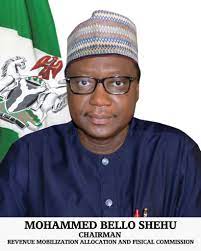
The Revenue Mobilization Allocation and Fiscal Commission (RMAFC) on Wednesday maintained that demands for the review of emoluments of political office holders and appointees gave the National Assembly grounds to fashion overheads and other entitlements for their aides.
Chairman of the Commission, Mohammed Shehu, who made this remark at a press briefing in Abuja said consistent public criticisms of its efforts at reviewing the emoluments of the President and other political office holders have availed the lawmakers to craft packages and other benefits for their aides.
While maintaining that political office holders are grossly underpaid compared to heads of agencies and thus encouraging corruption and undermining their performances, he solicited public support in its current efforts aimed at reviewing and raising official salaries of political office holders to reasonable levels.
The FMAFC Chairman clarified: “People like to make insinuations and mischief over it. Simply because you occupy an office and get a little salary, people accept that you can be as corrupt as you want to be, but when it comes to official salary, anytime you say you want to look at review, people start shouting: “It’s too much! How much is it? How many ministers do we have? How many legislators?
- Advertisement -
“Because of this, you now have the Senate and the House of Representatives crafting overheads and other things for themselve,s salaries of their aides, allowances, packages.
“So it’s about time that people like you, and others, should support the commission to come up with reasonable living salaries for ministers, DGs, and the president. You are paying the President of the Federal Republic of Nigeria 1.5 million naira a month, the president of a country with over 200 million people. That’s what you pay him. Everybody believes that it’s a joke. This was set in 2007, 2008, and since that time, it has not been reviewed.
“You cannot pay a minister less than one million naira per month. Since 2008, their salaries have not increased, and yet you expect them to put in their best without necessarily being involved in other things. So I will want your support, and the support of your people.
“Let’s face it, it is really sickening. I have said it over and over again: you pay a CBN governor or a DG of NPA or NCC ten times what you pay the President of the Federal Republic of Nigeria. That is just not right. Or you pay them twenty times higher than the Attorney General of the Federation that is absolutely not right”, he added.
Commenting on the minimum wage for workers, Shehu said the commission cannot intervene as its constitutional duty is limited to political office holders and appointees, pointing out that except the remuneration of workers is reverted to the agency, it can only limit itself to its constitutional mandate of emoluments of political office holders.
He explained: “For those of you who are not aware, it is part of the constitutional responsibilities of the commission to come up with acceptable remuneration for political, as well as legislative and judicial office holders. Now, the commission did that of the judiciary last year, together with Mr. President and the National Assembly.
“The major controversy has always been about other political office holders. But I have always said we have debated this, you cannot pay a minister less than one million naira per month. Since 2008, their salaries have not increased, and yet you expect them to put in their best without necessarily being involved in other things.
“I can tell you, the commission is coming out with another report on the emoluments of political office holders: governors, senators, legislators, ministers, directors-general, and others. It’s not that the commission despises Nigerian workers, but it is not the responsibility of the commission to take care of minimum wage and the salaries of other workers”, Shehu added.
He, therefore, appealed to stakeholders to support the Commission, particularly on the implementation of its reports, noting that better remuneration, effective use of funds, public transport, free primary/secondary education, and stronger local governments are key to national development.