
The Nigeria Sovereign Investment Authority (NSIA) has reported that it recorded a core total comprehensive income (Core TCI) of N478.8 billion ($320.2 million) in 2025 financial year, its highest since its inception.
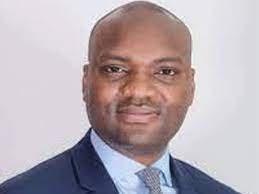
The Authority’s Managing Director Mr Aminu Umar-Sadiq, who spoke on the company’s financial performance in the financial year on Thursday in Abuja, disclosed the NSIA’s total assets rose by 10.9 per cent year-on-year to N4.91 trillion just as its net asset value increased to N4.88 trillon at the close of business in 2025.
He clarified: “Total assets also grew 10.9 per cent year-on-year to close at N4.91 trillion ($3.42 billion), supported by N360.8 billion in capital contributions during the year and the record core earnings. The authority attributed the balance sheet expansion to dynamic asset allocation, efficient liquidity deployment, and a 35.8 per cent increase in investment securities.
“Net asset value in dollar terms rose 19.8 per cent, from $2.8 billion in 2024 to $3.4 billion in 2025, underpinned by $241.2 million in cumulative capital injections and $320.2 million in net earnings. Return on Equity climbed to 10.5 per cent from 7.2 per cent the prior year, while Return on Assets improved to 9.9 per cent from 7.1 per cent, reflecting sustained profitability across the authority’s diversified, global investment portfolio.
- Advertisement -
“NSIA’s 2025 financial results reaffirm its strong track record in delivering financial returns, strategic national impact, and intergenerational wealth creation,” the authority’s managing director, the investment expert added.
According to him, beyond its investment returns, the NSIA deployed capital across critical sectors in the year under review
Specifically, Umar-Sadiq reported that in health sector, the NSIA’s MedServe platform secured a $24.3 million concessional facility from the World Bank’s International Development Association (IDA) and the International Finance Corporation (IFC) to enhance diagnostic, cancer care, and cardiac services nationwide.
He hinted that based on the funding in the sector, eight additional centres are scheduled to become operational by the third quarter of 2026, backed by equipment partnerships with GE.
The NSIA boss also said that in the energy sector, the NSIA boosted its Renewables Investment Platform for Limitless Energy (RIPLE), a $25 million flagship platform targeting generation, distribution, and manufacturing projects.
Umar-Sadiq expatiated that the RIPLE reached financial close on a 400MW solar photovoltaic module assembly plant in Ogun State and partnered EM-ONE Energy Solutions to deliver a clean energy plant at the MedServe-LUTH Cancer Centre under an Energy-as-a-Service model, adding that the project is projected to eliminate approximately 250,000 litres of diesel consumption annually and avoid up to 663 tonnes of carbon dioxide emissions.
Similarly, he revealed that in the ICT sector, the NSIA and the Japan International Cooperation Agency (JICA) during the year launched a $50 million innovation fund to support high-impact Nigerian startups across key sectors, including agriculture, healthcare, education, energy, and water management.
This is even as the NSIA chief confirmed that in agriculture sector, the Authority committed $25 million to a cold-chain logistics platform designed to provide 15,000 pallet spaces of temperature-controlled storage across Lagos, Kaduna, Kano, Benue, and Plateau, targeting post-harvest loss reduction and food supply chain strengthening.
Also, Umar-Sadiq reported that the NSIA also successfully transitioned the Presidential Fertilizer Initiative to the Ministry of Finance Incorporated (MOFI), leading to the increase in the blending plants from four to over 80 with over 128 million bags of fertiliser produced for Nigerian farmers last year.
On the outlook of the NSIA’s operations in the years ahead, he assured that “NSIA strategic focus on portfolio diversification, risk-adjusted returns, and catalytic investments is expected to continue driving economy-wide impact across its stabilisation, infrastructure, and future generations mandates.”