

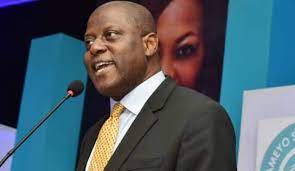
…As Cardoso Seeks Nigeria-Middle East Region Stronger Ties
The Governor of the Central Bank of Nigeria (CBN), Mr. Olayemi Cardoso, has disclosed that Nigeria’s foreign reserves (FX) has exceeded $40 billion, marking the highest level in nearly three years, following the apex bank’s sustained monetary reforms to enhance the financial system.
The CBN governor made this remark during a panel discussion moderated by the Director, Middle East and Central Asia Department, IMF, Jihad Azour, at the just-concluded 2-day maiden Conference on Emerging Markets Economies (CEMEs) organised by the Ministry of Finance, Saudi Arabia, and the International Monetary Fund (IMF) Regional Office in Riyadh.
Cardoso cited reforms in the financial markets that addressed distortions in the Nigerian foreign exchange (FX) market, which had previously experienced a gap of up to 60% between the official and parallel market exchange rates, as the major factor responsible for the growth in the nation’s FX reserves.
- Advertisement -
He noted that due to consistent policy direction, improved market confidence, and enhanced transparency in forex trading, the gap has significantly narrowed to approximately 4-5%.
Cardoso attributed some of the achievements of the CBN to the adoption of an electronic matching system to improve transparency in the market and the introduction of FX code of ethics, which all Nigerian banks signed to ensure adherence to market rules.
He acknowledged that Nigeria had faced significant economic challenges, including capital flow exits, multiple exchange rate regimes, currency depreciation, high inflation, and a backlog of foreign exchange transactions, which led to a loss of confidence in the country’s currency.
The CBN governor recalled that on his assumption of office, his team prioritised restoring confidence in the FX market by addressing the backlog of FX transactions and demonstrating a commitment to economic stability.
While pointing out that the Nigerian government implemented a tight monetary policy stance to tackle inflation and restore macroeconomic prudence, the banker said that over the past year, the CBN had raised interest rates by 850 basis points and shifted away from quasi-fiscal interventions that had distorted the economy. He stressed that Nigeria’s approach had remained firmly rooted in orthodox monetary policies, a stance that was consistently communicated to market participants.
Cardoso listed another significant reform by the government as the removal of the fuel subsidy, which, along with multiple exchange rate inefficiencies, had cost the country approximately 6% of its Gross Domestic Product (GDP) annually.
On financial sector reforms, he explained that the CBN had mandated banks to re-capitalise to strengthen the financial system and build buffers to withstand future economic shocks. He noted that these measures had so far proven successful in bolstering the sector.
Addressing the broader global economic climate, Cardoso harped on the importance of tailoring policy decisions to each economy’s unique needs. He recounted how Nigeria continued to tighten monetary policy even when global trends suggested otherwise.
He noted that despite the initial skepticism, many financial system players locally and internationally had recognised that Nigeria had made the right decisions based on its specific economic conditions.
Speaking on the actions required to enhance financial inclusion and the role of digitalisation and financial technology in mitigating potential risks, the apex bank governor cited Nigeria’s experience, where the financial inclusion rate currently stands at 74%.
He stressed the need to expand this aggressively to ensure that economic growth benefits all segments of society. As the economy rebounds, he emphasised reducing disparities and ensuring broad-based financial access.
Highlighting digitalisation as a key driver in advancing financial inclusion, he stated that expanding mobile money services, leveraging technology and prioritising gender-focused initiatives due to the positive economic impact of empowering women across the African continent would significantly close the financial access gap, particularly for underserved populations.
He reaffirmed the CBN’s commitment to maintaining macroeconomic stability, sustaining policy consistency, and ensuring long-term resilience for the Nigerian economy.
Meanwhile, Cardoso has canvassed stronger economic ties between Nigeria and Middle East nations as well as Nigerian diaspora community in the region.
The apex bank governor, who made this remark during a meeting with Talal Al-Humond, the Assistant Governor for Monetary Affairs, Saudi Arabia Central Bank – SAMA, pointed out that there were lessons to be learned by Nigeria from Saudi Arabia in terms of infrastructure development and tourism.
According to him, Saudi Arabia’s dedication to diversifying its economy through innovative environmental projects, large-scale transformation, and tourism investment is essential for development.
Cardoso also reaffirmed the CBN management’s commitment to collaborating with the Nigerian Diaspora community in the Middle East to improve foreign exchange (FX) remittance inflows in order to strengthen Nigeria’s financial sector.
He maintained that the CBN would continue to enhance macroeconomic fundamentals through monetary policy reforms to establish an enabling environment that will facilitate the growth of the private sector and the generation of high-quality jobs for Nigerians.
In his remarks, Al-Humond assured Cardoso that the Saudi Central Bank was ready to work with the CBN to ensure the attainment of mutually beneficial objectives.