

…Says Despite Positive Implications, Challenges Persist
The International Monetary Fund (IMF) has attributed the recent deceleration in Nigeria’s headline inflation partly to the Central Bank of Nigeria’s (CBN’s) monetary tightening policies and the effects of its foreign exchange (FX) market reforms.
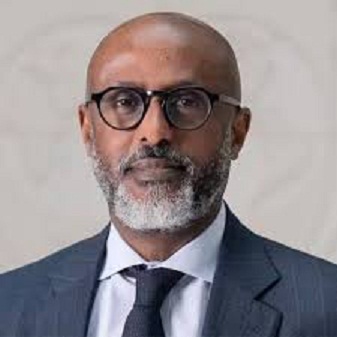
The Director of the African Department at the IMF, Abebe Selassie, made this remark during a press conference on the IMF’s October Regional Economic Outlook for Sub-Saharan Africa on the sidelines of the IMF–World Bank Meetings in Washington, D.C.
The National Bureau of Statistics (NBS) had on Wednesday, in its latest Consumer Price Index (CPI) Report for September, reported that Nigeria’s headline inflation rate eased to 18.02 per cent in September compared to 20.12 per cent in August 2025, representing the sixth consecutive month of deceleration and the lowest CPI rate in three years.
- Advertisement -
Commenting on the positive development for the Nigerian economy, the IMF Director said: “Starting with inflation in Nigeria, we find the decline in inflation consistent with the tightening of policies that have been undertaken in recent years, particularly on the monetary policy front, but also the effect of the exchange rate adjustment that took place over the last year or so and more, having come through the system. So it is consistent with the policy calibration that we see. We’re encouraged by it, but I think there are still some ways to go to get to the government’s target.
“Now, to be very clear, what is being reported, of course, is that the rate at which prices are increasing is slowing down, but there’s been a level shift in the level of inflation. And this is not unique to our countries; it’s elsewhere also, but particularly biting because, you know, this cost-of-living crisis has hit our people way more than others, with limited capacity to perhaps withstand this shock. So I don’t want to in any way underestimate the extent of dislocation that has happened in recent years on account of all of these shocks that our countries have been subjected to”, the finance expert added.
Reflecting on the rising debt profiles in the SSA region, Selassie noted that “public debt is high, of course, in many countries in the region. Right now, we estimate about 20 countries to be in a situation of high risk of debt distress. This comprises about 14 countries at high risk of debt distress and another six in actual debt distress. So, you know, that’s one metric of debt vulnerabilities. There are other indicators you can look at, and they all show that public debt burdens are high. So, you know, this is exactly why reforms are needed.
“First and foremost, of course, is trying to put in place the reforms that will encourage higher economic growth. That is one important input that will contribute to making debt servicing affordable. And beyond that, also, in many countries, there is a need to, you know, do some fiscal reforms. And the extent to which revenue mobilisation or public expenditure reprioritisation needs to take place varies from country to country. And, you know, we engage in this in the individual discussions that we have with countries.
“But I think the broad direction of travel is one where our countries have been investing quite a lot in recent years in infrastructure, in health, in public education, and in many important areas”, he added.
On revenue mobilization efforts of the Federal Government, the finance expert noted that the government had identified domestic revenue mobilisation as perhaps the most overriding challenge that the country faces as prolonged overdependence on oil resources has been problematic for Nigeria, adding that the focus on revenue mobilization by the President Bola Tinubu-led in recent years is a right one.
This is even as he maintained that it had become imperative for the Nigerian government to capture the rate of return on all its major investments through the tax system.
Selassie expatiated: “We see potential, we see scope for revenue mobilisation. But this mobilisation has to go hand in hand with showing that the money that is being collected is being used for the right reasons, for the right purposes. When you talk about tax levels, people consider tax levels high; it is also because they do not see enough infrastructure services, enough, you know, public services in terms of health and education.
“So, you know, also demonstrating that what money is being collected is going to the right areas, minimising leakages and corruption, is all also part and parcel of the effort that has to take place. And again, this extent of challenge in this area also varies from country to country, but that is, I think, a related agenda, as I also said in my opening remarks.
“Lastly, on illicit financial flows, I think, you know, this is the nature of, you know, what comprises things that we consider illicit financial flows varies. Some of it is just simple trade, you know, leakages to do with capital outflows. Others have related to, you know, people trying to circumvent the tax system. Still others are completely illegal flows, you know, related to corruption or other flows.
“So I think, you know, the way to tackle this is to identify what the source of the particular flows is and tackle them through reforms. So again, a lot of the reforms, the direction of reforms that countries are pursuing, should go in a way to help address many of these challenges that we are seeing in terms of illicit financial flows”, he added.
Selassie said that the sub-Saharan region’s economic growth was projected by the IMF to hold steady at 4.1 per cent in 2025, with a modest pickup expected in the following year.
He said: “This reflects ongoing progress in macroeconomic stabilisation and reform efforts across key economies. Several countries, Benin, Ivory Coast, Ethiopia, Rwanda, and Uganda, are among the world’s fastest-growing. However, resource-intensive and conflict-affected countries continue to face significant challenges, with only modest gains in income per capita.
“The external environment remains challenging. Global growth is slowing, and commodity prices are diverging. Oil prices are declining, while prices for cocoa, coffee, copper, and gold remain elevated. External financing terms have improved somewhat, allowing a few countries, notably Kenya and Angola most recently, to access international capital markets.
“There is significant potential for countries in the region to raise revenues through comprehensive tax policy reforms and improved tax administration. This includes modernising tax systems through digitalisation, streamlining inefficient tax expenditures, and strengthening enforcement via targeted compliance strategies.
“However, these efforts must go beyond technical adjustments. It will be essential to build public trust in tax institutions, strengthen institutional capacity, and conduct careful impact assessments, including distributional analysis, to ensure that reforms are both effective and equitable.
“Second, debt management. Enhancing debt transparency and strengthening public financial management can help reduce borrowing costs and unlock innovative financing. Publishing comprehensive debt data and reinforcing budget oversight are key steps forward. These priorities are critical for building resilience and supporting inclusive, sustainable growth across sub-Saharan Africa”, the IMF chief added.




