
…Though Nigeria Endorses Energy Compacts Early This Year
Seventeen African governments last Friday had committed to reforms and actionable plans to expand electricity access as part of Mission 300, an ambitious partnership being championed by the World Bank Group and African Development Bank Group (AfDB) to connect 300 million Africans to electricity by 2030.
Curiously, despite its inability to guarantee uninterrupted electricity supply to individuals and businesses in the country, the Nigerian government was not part of the deal.
A news report by the African Press Organisation (APO) Group, indicated that the deal was sealed at the Bloomberg Philanthropies Global Forum.
- Advertisement -
Specifically, the national Energy Compacts covered practical blueprints that guide public spending, trigger reforms, and attract private capital and were endorsed by Benin, Botswana, Burundi, Cameroon, Comoros, the Republic of the Congo, Ethiopia, Gambia, Ghana, Guinea, Kenya, Lesotho, Mozambique, Namibia, São Tomé and Principe, Sierra Leone, and Togo.
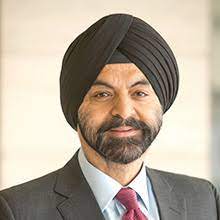
Commenting on the deal, the World Bank President, Ajay Banga, said: “Electricity is the bedrock of jobs, opportunity, and economic growth. That’s why Mission 300 is more than a target—it is forging enduring reforms that slash costs, strengthen utilities, and draw in private investment.”
In his remarks, the AfDB President, Dr Sidi Ould Tah, explained: “Reliable, affordable power is the fastest multiplier for small and medium enterprises, agro-processing, digital work, and industrial value-addition. Give a young entrepreneur power, and you’ve given them a paycheck.”
National Energy Compacts are at the core of Mission 300, developed and endorsed by governments with technical support from development partners. Tailored to each country’s context, these practical blueprints integrate three core tracks—infrastructure, financing, and policy.
Earlier this year, Energy Compacts were endorsed by Chad, Côte d’Ivoire, Democratic Republic of Congo , Liberia, Madagascar, Malawi, Mauritania, Niger, Nigeria, Senegal, Tanzania, and Zambia. They pledged to make more than 400 policy actions to strengthen utilities, reduce investor risk, and remove bottlenecks.
The World Bank Group and the AfDB Group are working with partners including the Rockefeller Foundation, Global Energy Alliance for People and Planet (GEAPP), Sustainable Energy for All (SEforALL), and the World Bank’s Energy Sector Management Assistance Program (ESMAP) trust fund to align efforts in support of powering Africa.
Many development partners and development finance institutions are also supporting Mission 300 projects through co-financing and technical assistance.
Since the launch of the Mission 300, 30 million people have already been connected, with more than 100 million in the pipeline.