
Over the past decades, the Nigerian Communications Commission (NCC) has continued to be a reference point in impressive performance among other regulatory agencies in the Nigerian public service as the successive boards and managements of the commission have been giving all that it takes, in terms of professionalism, intellectual resourcefulness, sense of purpose, and patriotic commitment, to transform the commission into a leading player in the global telecommunications landscape.
Yes, it can be said that since the establishment of the NCC in 1992, the successive boards and managements have done well to position the Nigerian telecommunications industry on the path of sustainable growth, the year 2025 remained epochal in their transformational initiatives given the quantum of investments and improved performance of the telecoms industry, which have continued to elicit local and international commendations for the leadership of the commission over the past months.
A cursory appraisal of the NCC’s performance this year reflected a remarkable scorecard across the broad spectrum of its regulatory mandate, making the year, which started with some bickering among the Mobile Network Operators (MNOs), the banks and telecom customers, now being rounded off with a collaborative move on how to position the nation’s telecoms industry among the best globally in terms service quality, opportunities for foreign direct investments, human capital digital skills, among other assessment parameters.
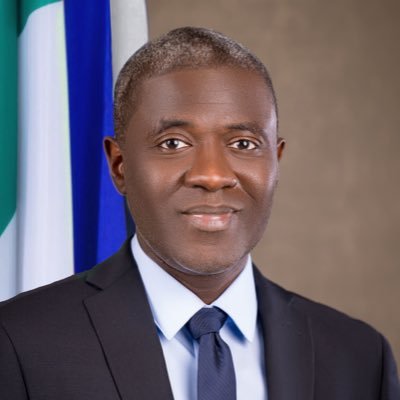
Speaking early this year, the Executive Vice Chairman and Chief Executive Officer of the Nigerian Communications Commission (NCC), Dr. Aminu Maida, assured industry stakeholders, particularly subscribers, of the commission’s determination to consolidate on its achievements last year through innovative regulatory regime.
- Advertisement -
Maida, while reflecting on key achievements of the NCC last year, including the successful implementation of the Federal Government’s NIN-SIM linkage policy and the implementation of the Critical National Information Infrastructure (CNII) project, promised to improve service delivery and promote transparency within the telecommunications sector in 2025.
With just a few days to the end of the year, the EVC has walked his talk on the plan of the NCC’s management to ensure that the industry moved forward in terms of quality service and customers’ experiences.
For instance, while the National Association of Telecommunications Subscribers (NATCOMS) had in January threatened to file a lawsuit against MNOs over the planned hike in telecom services tariffs effective from January this year, after days of evidence-based parleys with the parties, the NCC was able to amicably resolve the tariff hike faceoff, thereby averting a major crisis that would have grounded the political economy disconnect Nigeria from the global digital space.
After its meeting with the MNOs, the NCC announced in a statement that pursuant to its power under Section 108 of the Nigerian Communications Act, 2003 (NCA) to regulate and approve tariff rates and charges by telecommunications operators, it capped the tariff hike for telecom services at a maximum of 50% of current tariffs, based on the ongoing industry reforms that will positively influence sustainability.
Another landmark feat by the Dr. Aminu Maida management-led commission that helped in shaping the telecom industry’s landscape this year was the resolution, in partnership with the Central Bank of Nigeria (CBN) and other agencies, the “war” between the Deposit Money Banks (DMBs) and the MNOs over the N200 billion Unstructured Supplementary Service Data (USSD) debt owed the telcos by the banks. The debt was finally paid and by that singular act, the NCC demonstrated its mediatory capacity to make the telecoms industry space conducive to improved investments.
Now coming to the primary focus of this news analysis, which is the investment inflows into the sector and its contributions to the nation’s Gross Domestic Product (GDP), the NCC had in the past few months boosted investments in the nation’s telecoms industry with broadband expansion and penetration into the hitherto unreached remote communities in the country.
For instance, in demonstration of its confidence in the NCC’s regulatory stance on transparency and accountability in the sector, the World Bank Group in March this year expressed its readiness to partner the Federal Government on the 7,000 new telecoms towers project in rural areas with a target of $3 billion to boost the country’s broadband infrastructure.
The World Bank Regional Director (Infrastructure) West and Central Africa, Franz Drees-Gross, said: “We plan to set up a digital national broadband fund and to roll out about 95,000 kilometres of what we call middle mile cable. That’s terrestrial cable in Nigeria to bring broadband to more parts of the country.”
To further demonstrate foreign institutions’ growing confidence in the telecom sector, Nigeria was also listed among the key beneficiaries of the European Union’s (EU’s) €150bn funding support for infrastructure development through its Global Gateway initiative, which will be disbursed across Africa by 2027. The foreign investors’ financing is also being complemented with local investments in other assets, particularly fibre optic cables over the past few months.
As expected, the investments in critical assets of the industry are yielding the desired results in terms of subscription rate, internet access and the nation’s teledensity. Latest data from the commission showed that Nigeria’s broadband penetration rose to 49.89 per cent in October, up from 49.34 per cent in September and 48.81 per cent in August, indicating a gradual progress in high-speed internet access nationwide.”
The commission’s data also showed that active mobile subscriptions increased to 175,322,398 in October up from 173,541,983 in the preceding month, while teledensity rose to 80.87 per cent marginally up from the 80.05 per cent recorded in the preceding month.
This is even as the just published data by the National Bureau of Statistics (NBS) on ‘Nigeria’s Gross Domestic Product (GDP) Q3, 2025’ showed that Nigeria’s telecom sector contributed around 9.1% (about N4.4 trillion) to the nation’s GDP in Q3 2025 driven by rising data demand, broadband expansion (4G/5G), and rising digital adoption by millions of Nigerians.
Speaking on the performance of the sector in the quarter under review, he President of the Association of Telecommunications Companies of Nigeria (ATCON), Tony Emoekpere, described the sector’s improved performance to “the policies that have been put in place and the fact that this government has been responsive to industry needs.”
While noting that Nigeria’s broadband penetration has reached 48.81% as of August 2025, connecting more than 140 million Nigerians to the Internet, Maida maintained that each percentage point increase in broadband penetration directly boosted Nigeria’s GDP and that a 10% increase can drive up to 1.38% GDP growth in developing nations.
The EVC, while reflecting on the experiences in other countries at a recent forum, cited the examples of some nations like Rwanda and India, which leveraged broadband investment to build multi-billion-dollar digital economies, to justice his position.
The EVC said: “With over 200 million people and a median age of just 18, Nigeria has the potential not only to replicate those success stories but to surpass them, if we provide our youth with reliable, affordable, high-speed broadband access.”
Although the Nigeria’s National Broadband Plan (2020-2025) target of boosting the nation’s digital transformation by increasing broadband penetration to 90% with speeds of 25Mbps in urban and 10Mbps in rural communities by 2025 may not have been fully achieved, it is anticipated that the ongoing initiatives by the NCC, with the support of the Federal Government and development partners, will make the broadband penetration target a reality in the near future.
In concluding this write up on how the NCC is transforming the nation’s telecoms industry landscape with innovative and futuristic regulatory policy regime, it is safe to say that the commission has really done well this year and will consolidate on its modest achievements now in 2026 if the needed support from the governments and stakeholders in the rapidly evolving industry is given to the commission.
(This news analysis is written by Tola Akinmutimi, Editor-In-Chief, BRTNews.ng)