
The International Labour Organisation (ILO) has charged the Group of 7 (G7) Labour and Employment Ministers to take bold and decisive action to empower young people for the future of work, expressing deep concern that one in five young people is not in education, employment or training.
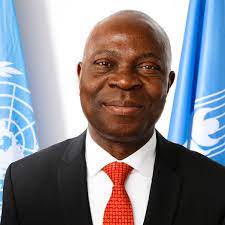
The Director-General of the global labour organization, Gilbert F. Houngbo, gave the charge during an online G7 Labour and Employment Ministers’ Meeting under Canada’s presidency with the theme “Empowering Youth for the Future of Work”.
Houngbo welcomed the adoption of new commitments to expand opportunities for young people and strengthen inclusive labour markets.
The labour expert said: “The current young generation is the most educated in history, which is positive news. Yet one in five young people is not in education, employment or training.
- Advertisement -
“In the G7 countries, youth unemployment remains six and a half percentage points higher than adult unemployment, a stubborn gap that tells us that this is not temporary, but a structural feature of labour markets, with compounding effects for future generations. We must focus on empowering young people for the future of work – not just in principle, but in practice”, Houngbo added.
The communiqué issued at the G7 Labour and Employment Ministers’ meeting underscored the importance of addressing labour force participation challenges, including tackling youth unemployment and barriers to workforce entry to both boost opportunity and drive economic growth.
The ministers also reaffirmed the need to empower workers with the skills needed to thrive in a rapidly changing labour market, ensuring resilience and adaptability across the workforce, and reasserted a commitment to advancing economic opportunities for all, including persons with disabilities.
Houngbo stressed that if youth see only insecurity, the reservoir of unrealized potential would weaken global social cohesion and undermine trust, stressing that “but if they see ladders of opportunity, they will climb, innovate and foster prosperity for our collective future.”
The Director-General outlined three priorities for G7 action including equipping youth for the technological transformation of labour markets, including through the G7 Action Plan on AI to deliver opportunities for their equitable inclusion.
Others are enabling full participation of youth with disabilities by addressing lower labour market participation rates and higher Not in Education, Employment or Training (NEET) levels among this group of young people through targeted measures and improved disability disaggregated labour market statistics; and tackling structural barriers by implementing youth guarantees, strong school to work transition systems, and social protection to support decent job opportunities.
The ministers launched a compendium of best practices for a human-centred development and use of Artificial Intelligence in the world of work, developed with contributions from G7 members, the Organisation for Economic Cooperation and Development (OECD), and the ILO.
Also, they underscored the importance of coordinated action to address pressing labour and employment issues across the G7.
Houngbo reaffirmed the ILO’s readiness to support G7 members in implementing inclusive strategies that ensure the future of work becomes a future of decent work for all.