

The International Labour Organisation (ILO) has reported that despite major gains in education, poverty reduction and productivity over the past three decades, entrenched inequalities, fragile trust in institutions and slow progress in key areas continue to hold back social justice worldwide.
The labour organization, in its latest study titled ‘The State of Social Justice: A Work in Progress’ published ahead of the Second World Summit for Social Development scheduled to hold in Doha in November and marking 30 years since the landmark 1995 Copenhagen Summit on Social Development, found that while the world is wealthier, healthier and better educated than in 1995, the benefits had not been evenly shared and progress in reducing inequality has stalled.
The study listed the key achievements since 1995 as including halving the rate of child labour among 5- to 14-year-olds (from 20 to 10 per cent), reducing extreme poverty from 39 to 10 per cent, raising primary school completion rates by 10 percentage points, and achieving, for the first time, social protection coverage for over half of the world’s population.
However, despite the achievements recorded over the past years, the report highlighted the stark and persistent deficits, namely 71 per cent of a person’s earnings are still determined by circumstances of birth such as country and sex; and informality has fallen by only two percentage points in two decades and still affects 58 per cent of workers.
- Advertisement -
Others are, the gender labour force participation gap has narrowed by just three percentage points since 2005 and remains at 24 per cent; and at current rates, it will take a century to close the global gender pay gap.
The ILO further reported that trust in institutions had been declining worldwide since 1982, reflecting growing frustration that effort is not being rewarded fairly.
It, therefore, warned that unless action was taken to strengthen the social contract, this erosion of trust could undermine the legitimacy of democratic systems and global cooperation.
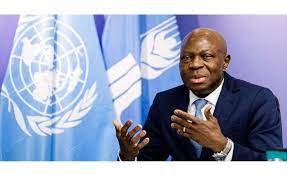
Commenting on the report’s findings, ILO Director-General, Gilbert F. Houngbo, said: “The world has made undeniable progress, but we cannot ignore that millions remain excluded from opportunity and dignity at work. Social justice is not only a moral imperative – it is essential for economic security, social cohesion and peace.”
The findings come at a time of profound transformation. Environmental, digital and demographic shifts are reshaping labour markets at unprecedented speed. Without deliberate policies, these transitions could deepen inequality. With the right measures, including investment in skills, social protection, fair wage systems and active labour market policies, they can become engines of inclusion and resilience, highlights the study.
To promote social justice worldwide, the ILO called for urgent action to tackle unequal access to opportunities, ensure fairer distribution of economic gains, and manage environmental, digital and demographic transitions so that no one is left behind.
It stressed the need to place social justice at the core of all policymaking – from finance and industry to health and climate – and to strengthen cooperation among governments, international institutions and social partners to deliver coherent responses to global challenges.
The latest findings are expected to form part of the focal points during the discussions at the upcoming World Social Summit in November and support the work of the Global Coalition for Social Justice in advancing fairer, more inclusive societies.
The Global Coalition is an ILO-led platform bringing together governments, employers, workers’ organizations and other partners to accelerate action and cooperation towards achieving social justice and decent work for all.




