

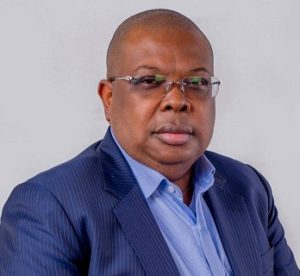
The Federal Government on Wednesday hinted about its plan to establish a national call centre where electricity consumers can lodge their complaints about the state of power supply in their locations and have such complaints promptly resolved.
The Minister of Power, Joseph Tegbe, gave this hint at the commissioning of a 3-megawatt hybrid mini-grid project and renewable energy workshop and training centre at the Yakubu Gowon University, formerly University of Abuja.
A statement issued by the ministry quoted the minister as saying that the centre, when established, would also provide a dedicated channel for reporting vandalism of critical electricity infrastructure for immediate action and remediation
The minister said: “My office is working on a call centre where electricity complaints across the country can be lodged and resolved. This initiative will provide sustainable job opportunities for our youth nationwide.
- Advertisement -
“In addition, we plan to provide a dedicated channel where vandalism of critical assets can be reported for immediate action and remediation. We are also working through a joint team of the Nigeria Police Force, the Nigeria Security and Civil Defence Corps, and the EFCC to curb the vandalism of electricity assets across the country.
“The promise of this investment now places a responsibility on all of us to preserve it. I expect the student community to support our ongoing efforts to stem the tide of vandalism. I therefore charge all of you to report any such act whenever you see it, not just on this solar system, but on other power assets such as transformers and transmission towers”, Tegbe added.
The Yakubu Gowon University installation comprised a 3.3MWp solar array with 3MW of AC output capacity and 2 megawatt-hours of battery storage to support critical loads after solar hours as well as a dedicated grid connection for non-critical demand outside daylight periods.
The minister said the project would benefit 58,726 students and that the 388 streetlights installed under the project would improve campus illumination and security, adding that the project will facilitate research, reduce dependence on diesel generators and ease pressure on institutional budgets.
Tegbe further clarified: “This connection between infrastructure and human capability is central to President Bola Tinubu’s Renewed Hope Agenda. Under his leadership, investment in electricity is being directed towards services and productive activities that improve people’s lives.”
“This sustained investment is a testament to this administration’s constancy of purpose. Continuing a national programme through successive phases, bringing projects to completion, and preparing the next phase reflects the discipline that development requires. For the young people who depend on these institutions, that continuity matters. It means that the commitment to their future remains active beyond any single project or ceremony”, the minister added.
According to the ministry, the 3MW hybrid mini-grid project is being implemented under Phase 2 of the Energising Education Programme, which covers seven universities and two teaching hospitals.