

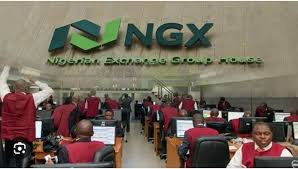
Economists and investment researchers at Bancorp Securities Limited, a leading investment research and consulting services firm in Nigerian, have projected that despite the rescheduling of the kick-off of the Central Bank of Nigeria (CBN) Monetary Policy Committee’s (MPC’s) meeting to Wednesday, February 19, the Nigerian equities market would sustain its positive momentum this week.
Noting that though investor sentiment in the local bourse during the trading sessions will likely be influenced by the monetary policy decisions of the MPC, the analysts linked the promising outlook of the market to portfolio rebalancing ahead of good earnings and dividend declarations of some listed companies.
According to the firm’s ‘Weekly Stock Recommendations for Feb 17-21 2025’ Note circulated to our correspondent on Monday, the Nigerian equities market sustained its bullish momentum last week, closing positive in three of the five trading sessions, driven by renewed buying interest in DANGCEM, which recorded gains for four consecutive days.
As a result, the NGX All-Share Index (NGXASI) rose by 2.00% week-to-date (WTD), closing at 108,053.95 points and pushing the year-to-date (YTD) return to 4.98% even as the market capitalisation also increased by N1.82 trillion to N67.41 trillion at the close of trading sessions on Friday.
- Advertisement -
On the macroeconomic outlook and implications on the economy and markets, the analysts noted that the passage of four tax reform bills for the second reading marked a critical step toward overhauling Nigeria’s tax framework. By harmonizing tax administration, eliminating multipl taxation, and streamlining dispute resolution, the reforms aim to expand the tax base and enhance government revenue.
They projected that, if effectively implemented, the reforms could improve fiscal sustainability and reduce reliance on oil earnings. However, enforcement challenges and economic strain on taxpayers could limit their effectiveness, potentially leading to compliance issues and business constraints.
The experts noted Nigeria’s crude oil production rose by 4% to 1.737mbpd in January, surpassing the OPEC’s quota for Nigeria for the first time in months, adding that this improvement supports forex inflows and fiscal stability but remains below the 2.06mbpd budget assumption, keeping revenue risks elevated. Historical trends suggest early-year production gains are often unsustainable due to oil theft, infrastructure constraints, and weak investment in upstream assets.
The experts further clarified: “Additionally, the government’s ban on crude exports allocated to domestic refineries, while supporting local refining, may reduce short-term forex inflows.
“Overall, sustaining fiscal stability will depend on both tax reform execution and oil production momentum. While improved tax administration could enhance revenue collection, balancing enforcement with economic realities remains crucial.
“In the oil sector, addressing structural inefficiencies and security risks will be key to meeting production targets and stabilizing external accounts”, they added.
On agricultural sector expectations, the Bancorp Securities researchers projected that he Nigerian agricultural sector was set for a significant boost with the expansion of the Special Agro-Industrial Processing Zones (SAPZ) across all 36 states and the FCT.
They predicted that $4.4 billion investment from the African Development Bank (AfDB) was expected to drive agro-processing, reduce post-harvest losses, and enhance rural economic development as well as attract private sector participation by providing essential infrastructure such as power,




