

…Plans Funding Bailout For Coy
The Federal Government has indicated its readiness to address the huge power tariff challenges affecting gas supply and payment structures at key thermal plants owned by the Nigerian National Petroleum Company Limited (NNPCL) with a view to optimizing the plants’ operations.
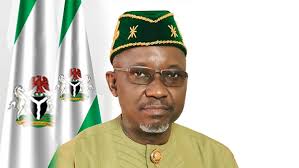
This disclosure was made during a meeting at the NNPC Towers in Abuja between the Minister of State for Petroleum Resources (Gas), Ekperikpe Ekpo; the Minister of Finance and Coordinating Minister of the Economy, Mr Wale Edun; and the leadership of the NNPC, led by Dr Salihu Jamari, who represented the Executive Vice President, Gas, Power and New Energy.
A statement issued by the media Assistant to the minister of state, Louis Ibah, on Wednesday, indicated that meeting focused on urgent financial and policy interventions to resolve tariff-related issues impacting the company’s Maiduguri Emergency Power Plant, Okpai Independent Power Plant (IPP) Phase 2, and Kano IPP Phase 1.
- Advertisement -
It was learnt that the NNPC Ltd team expressed concerns over delayed payments and tariff gaps within the Nigeria Bulk Electricity Trading framework, posing operational sustainability risks to the gas-fired power plants.
Ibah stated: “NNPC Ltd warned that without timely intervention, power supply to key regions may be jeopardised, with potential economic and social impacts.”
Ekpo maintained that the intervention was critical to ensuring Nigeria’s gas-to-power infrastructure delivers its full value to the economy and the people, especially to ensure reliable power generation stability and industrial development in Maiduguri, Kano, and increased supply to the national grid from Okpai Phase 2.
In his remarks at the meeting, Minister of Finance and Coordinating Minister of the Economy, Mr. Wale Edun, spoke on the need for a collaborative approach between stakeholders in the power sector to establish a sustainable financial mechanism in order to ensure the viability of the affected power plants given the potential implications for the country’s economic growth.
On the consensus reached at the meeting, the minister’s aide further stated: “All parties agreed to hold a follow-up meeting with the Minister of Power to work towards actionable solutions within a short timeline, focusing on finding a sustainable solution to ensure optimal operation of the affected power plants.”
Over the past two or more years, the nation’s power sector has been contending with sundry challenges associated with problems of power subsidies and inadequate metering of consumers.
The recent discontinuation of the N200 billion monthly subsidy and inability of the electricity distribution companies (DisCos) to recover substantial part of their costs is affecting the value chain, leading to billions of dollars owed to power generation companies (GenCos) and gas companies.




