

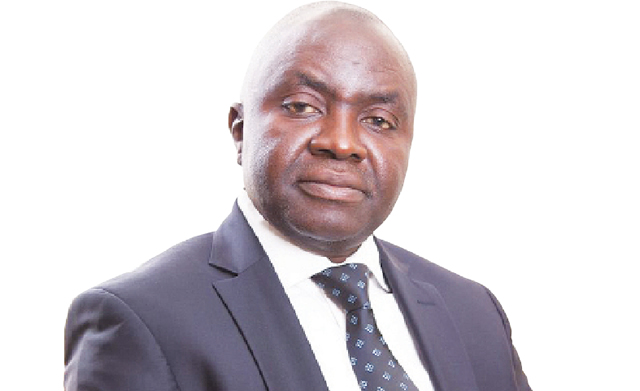
The Centre for the Promotion of Private Enterprise (CPPE) a leading organized private sector advocacy group in Nigeria, has advocated the need for the Federal Government to fine-tune its current fiscal and monetary policy reforms in order to consolidate on the recent macroeconomic gains and position businesses in the country for improved performance and improve living standards of ordinary Nigerians in the months ahead.
The OPS advocacy group, in its “Nigeria’s Economy In 2026: Half-Year Review and Second-Half Outlook” Brief with the theme “Macroeconomic Recovery, Structural Reforms and the Competitiveness Imperative” issued by the Director/Chief Executive Officer, Dr. Muda Yusuf, on Sunday, noted that Nigeria entered the second half of 2026 with markedly stronger macroeconomic fundamentals than at the beginning of the year.
Specifically, the CPPE boss stated that the fundamentals comprised exchange-rate stability, moderating inflation relative to the exceptionally elevated levels of 2025, stronger external reserves, improved oil production and resilient financial markets have reduced macroeconomic vulnerabilities and strengthened investor confidence.
Yusuf, however, pointed out that macroeconomic stabilisation had not yet led to significant, broad-based improvements in productivity, competitiveness, employment and household welfare, and that businesses continued to grapple with elevated production costs and structural bottlenecks. The defining policy challenge for the remainder of 2026 is therefore to convert improved macroeconomic conditions into inclusive, investment-driven and productivity-enhancing growth.
- Advertisement -
Broadly, the renowned economist maintained that the first half of 2026 reflected continued progress in macroeconomic stabilization as economic growth remained positive, the foreign exchange market became more orderly, external reserves improved, crude oil production strengthened modestly and government revenues benefited from improved oil receipts and stronger non-oil tax collections, just as financial markets also remained resilient, supported by improving investor confidence and policy credibility.
He pointed out that despite these encouraging developments, the real economy remained under considerable pressure. High interest rates continued to constrain private-sector investment and access to credit, while elevated energy costs, inadequate electricity supply, logistics inefficiencies and weak transport infrastructure sustained a high-cost operating environment.
Noting that manufacturing, agriculture and MSMEs faced persistent competitiveness challenges despite improvements in macroeconomic stability in the first half of this year, the CPPE boss lamented that insecurity continued to undermine agricultural production, disrupt supply chains and discourage investment across several sectors.
This is even as he recalled that in H1, capital expenditure implementation remained below expectations because of procurement delays, funding constraints and debt-service pressures, limiting the growth impact of fiscal policy.
Yusuf argued that overall, H1 2026 was characterised by stronger macroeconomic stability but only modest improvements in real-sector performance and household welfare, underscoring the need for deeper structural reforms.
On the OPS group’s stance on H2 2026 outlook, he stated that with respect to the outlook for the second half of 2026, the CPPE remained cautiously optimistic, projecting that economic output performance is expected to remain positive, supported by financial services, telecommunications, construction, trade, oil refining and other service-sector activities. Although growth is likely to remain below Nigeria’s long-term potential, the economy appears firmly on a gradual recovery path.
In addition, the economic expert also projected that inflation was expected to remain substantially below 2025 levels, although food supply disruptions, energy costs and developments in global commodity markets remain important upside risks, adding that exchange-rate stability should be sustained by stronger foreign exchange inflows, healthier reserves and improved market confidence.
In addition, the OPS advocacy group’s CEO projected that in H2 this year, financial markets were expected to remain broadly resilient, supported by banking-sector recapitalisation, stronger corporate earnings, improved regulatory oversight and sustained institutional participation, while improved domestic refining capacity and stronger crude oil production should also support fiscal revenues, foreign exchange earnings and energy security.
Yusuf, however, cautioned that the second half of the year also presented an important downside risk arising from the increasing intensity of political and electioneering activities ahead of the 2027 elections.
According to him, election-related spending could inject additional liquidity into the economy, with possible implications for inflationary pressures, foreign exchange demand and macroeconomic management just as there is also a risk that growing political activity could distract policymakers from economic governance, reform implementation and the execution of critical fiscal and structural policy initiatives.
From policy perspective, he stressed the need for government to prioritize the nation economy’s competitiveness as the next reform frontier as improvement in macroeconomic indicators provides an important foundation for sustainable growth, warning that competitiveness it is not sufficient on its own.
Yusuf pointed out that the next phase of reform should focus on lowering production costs, improving productivity and strengthening the competitiveness of Nigerian enterprises.
Specifically, he advocated: “Priority should be given to improving electricity supply, transport infrastructure, logistics efficiency, and port operations; strengthening security in farming communities and along transport corridors; expanding access to affordable long-term finance for productive sectors; accelerating budget implementation, strengthening budget process credibility, and improving infrastructure delivery; and deepening domestic value addition.
“Government revenue should increasingly be driven by efficiency-enhancing reforms rather than additional tax burdens, while policy consistency should be preserved despite increasing political activity ahead of the 2027 elections. It is equally important to minimise governance distractions and ensure that electioneering does not weaken the pace of reforms, budget implementation or the quality of economic management”, he added.
On the CPPE’s conclusive advisory to the government, the CEO noted that Nigeria was entering the second half of 2026 with its strongest macroeconomic fundamentals in several years, representing an important policy achievement and provides a stronger platform for investment and economic recovery.
Yusuf maintained that the more fundamental challenge, however, would be for the government to ensure that these gains are reflected in stronger business competitiveness, higher private investment, faster job creation and improved living standards.
He stated that the quality of economic management in the remainder of 2026 would, therefore, be judged less by the stability of macroeconomic indicators than by the extent to which structural reforms improve productivity and reduce the cost of doing business.
To consolidate the achievements recorded so far by the government through its ongoing initiatives, the economic expert advised the fiscal and monetary authorities on the imperative for “sustained reform momentum, stronger implementation capacity and continued policy consistency will be critical to translating macroeconomic recovery into durable, broad-based and inclusive economic transformation.”