

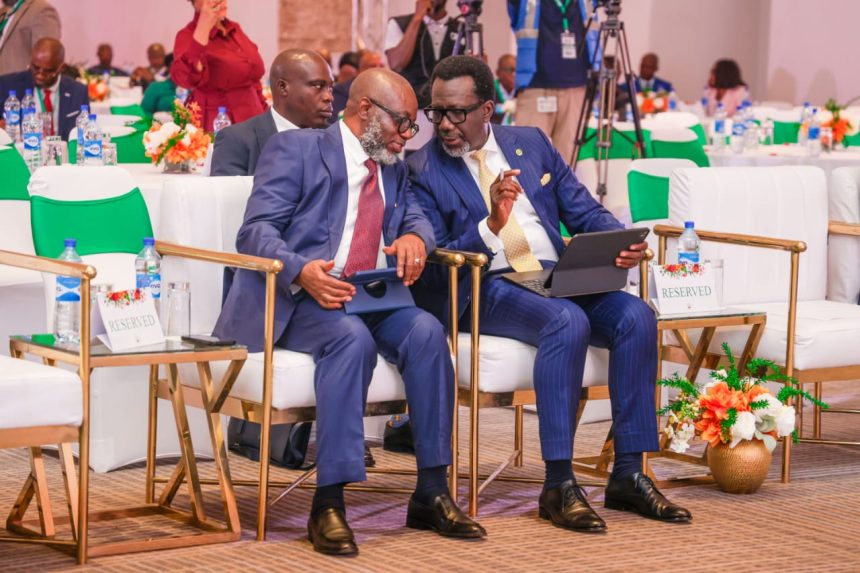
National Commissioner for Insurance and Chief Executive of the National Insurance Commission (NAICOM), Olusegun Omosehin, has told insurance companies that successful recapitalisation does not guarantee immunity from regulatory scrutiny and charged their boards to prioritise corporate governance, prudent capital management and risk-based supervision.
Omosehin gave the advice at the 8th Annual Insurance Directors’ Conference, organised by the College of Insurance and Financial Management in collaboration with NAICOM, with the theme, “Recapitalisation to Resilience: Leading the Risk-Based Capital (RBC) Era”.
The industry expert maintained that the completion of the recapitalisation exercise marked the beginning of a more demanding phase for the Nigerian insurance industry, pointing out that the real test of the exercise will be the ability of operators to translate their stronger capital positions into institutional resilience, improved underwriting capacity and better claims settlement.
According to him, recapitalisation is never intended to be the ultimate destination but a foundation for building stronger, more resilient and better-governed insurance institutions.
- Advertisement -
Omosehin explained that the industry must now move beyond raising capital to ensuring that available resources were properly governed, protected, deployed and aligned with the risks undertaken by individual companies.
He said: “The critical question before us is no longer simply whether insurance institutions have met the prescribed capital requirements. It is whether they can translate their strengthened capital positions into improved underwriting capacity, stronger risk management, better claims-paying ability, operational efficiency and sustainable growth.”
The NAICOM boss maintained that a well-capitalised institution was not necessarily a resilient one as financial institutions could fail despite substantial capital because of poor governance, weak internal controls, ineffective risk management and inadequate board oversight.
To consolidate on the benefits of the recapitalization exercise, Omosehin charged insurance directors to assume greater responsibility for institutional performance, insisting that board membership was not an honorary appointment but a position of trust carrying significant fiduciary, professional and regulatory obligations.
Specifically, he advised the boards to strengthen strategic leadership, capital stewardship, risk governance, management accountability and internal control systems, as well as ensuring that institutional strategies remain consistent with companies’ capital positions, business models and risk appetites.
In addition, he advocated the need for stronger independence in board decision-making, warning that shareholder expectations for returns and business growth must not override prudential considerations or encourage unsustainable business strategies.
Omosehin stressed that directors must be prepared to exercise independent judgement, even when their decisions might conflict with the immediate expectations of particular shareholders.
On the transition to the Risk-Based Capital regime, the National Insurance Commissioner explained that the Minimum Capital Requirement (MCR) and Risk-Based Capital (RBC) served complementary but distinct prudential purposes.
According to him, while the MCR establishes the minimum capital threshold required for an insurance institution to undertake its licensed business, the RBC assesses the risks assumed by an institution and determining the capital required to support those exposures.
He explained that recapitalization did not confer ommunity on insurance companies and that the NAICOM’s supervisory approach would increasingly focus on capital quality, risk management frameworks, governance effectiveness, institutional resilience and insurers’ capacity to meet their obligations to policyholders.
Omosehin maintained that the commission would place greater emphasis on the quality and reliability of regulatory returns, financial reporting, actuarial assessments and disclosures, stressing that “successful recapitalisation does not confer permanent immunity from regulatory scrutiny. Capital adequacy is a continuous responsibility. Institutions must remain financially sound and compliant throughout their operations.”
He further charged the insurers to maintain transparent and constructive engagement with the regulator, particularly where material developments or emerging vulnerabilities could affect their financial condition or ability to meet policyholder obligations.
On the economic implications of the successful recapitalisation exercise in the sector, the NAICOM boss said that a stronger insurance industry would be better positioned to support investments in infrastructure, energy, manufacturing, agriculture, construction and other strategic sectors of the Nigerian economy.
He explained that increased financial capacity would enable insurers to deepen domestic risk-retention capacity, reduce dependence on foreign insurance markets and emerge as significant sources of long-term institutional investment.
This is even as he clarified that a strengthened industry had the potential of improving insurance penetration, expand access to affordable products and contribute more meaningfully to financial inclusion and national economic development.
But then, Omosehin warned that these benefits would not be enjoyed without improved service delivery, innovative products, greater support for productive economic activities and prompt and fair claims settlement.
He also listed policyholder protection as crucial to the industry’s future sustainable growth as members of the public would continue to measure the strength of insurance companies not merely by their capital base but by their willingness and ability to honour contractual obligations, particularly as they related to claims payment to them.
Photo Caption
The National Commissioner for Insurance and CEO of NAICOM, Mr. Olusegun Omosehin (left) with Dr. Greg Ezeilo (SA to Minister on Public Finance) and the representative of the Minister of Finance and Coordinating Minister of the Economy Mr. Taiwo Oyedele at the event held in Lagos




