

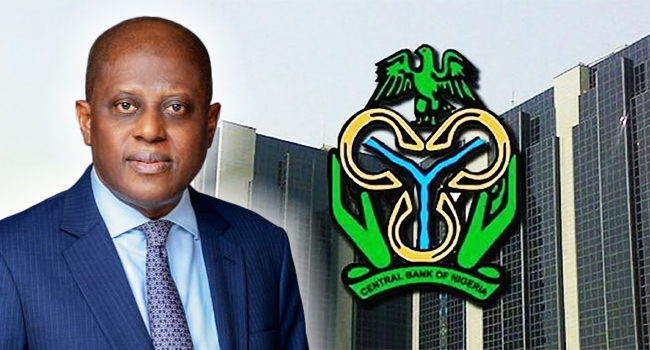
The Central Bank of Nigeria (CBN) at the weekend restated its commitment to achieving single digit inflation in the country as part of its transition to an inflation-targeting monetary policy framework.
In a statement issued by the apex bank on Sunday following an engagement with the Nigerian Economic Society and members of the academic community in Abuja, its Deputy Governor in charge of Economic Policy, Dr. Muhammad Abdullahi, was quoted as saying that the shift to inflation targeting represents a major change in Nigeria’s monetary policy approach.
The banker, who expressed the view during the session with the NES and academic community teams held on March 18, 2026, described the engagement essential to the ongoing economic reforms of the government, adding that the new framework would strengthen policy credibility and long-term price stability.
The statement partly reads: “The transition to an inflation-targeting framework marks a significant shift toward a transparent, forward-looking, and rules-based monetary policy system anchored in long-term price stability.”
- Advertisement -
Abdullahi maintained that the framework would serve as a key anchor for the economy by shaping expectations and reducing the impact of external shocks as the apex bank’s single digit inflation targeting would serve as a crucial nominal anchor for the Nigerian economy.
This is even as he projected that stabilising inflation expectations would help lower risk premia and support long-term investments in the economy.
The apex bank further clarified that ongoing global uncertainties, including geopolitical tensions and volatile energy prices, had necessitated the need for a credible monetary anchor more urgent for emerging economies.
It recalled sundry monetary reforms being implemented by it to support the inflation transition, including a return to orthodox monetary policy tools and a gradual withdrawal from quasi-fiscal interventions.
It cited the foreign exchange (FX) market reforms, such as rate unification and the introduction of electronic trading platforms, as some of the measures that had improved price discovery and reduced volatility just as improvements in banking sector stability had been achieved through recapitalisation programme.
The CBN stated: “Headline inflation declined sharply from 34.8 per cent in late 2024 to 15.1 per cent by early 2026, driven by sustained monetary tightening and improved policy discipline.
“The medium-term target is to steer inflation into a single-digit range of 6–9 per cent, barring major external shocks”, it added.
Earlier in his remarks, the apex bank’s Director of the Monetary Policy Department, Dr. Victor Oboh, said partnership with the academic community remained essential to improving monetary policy effectiveness.
He explained that the success of inflation targeting depended not only on technical design but also on public trust and communication, adding that academics, researchers, and thought leaders will play important roles in shaping narratives, influencing expectations, and building the evidence base for sound policy decisions by the apex bank.
In his remarks, the President of the NES, Dr. Baba Musa, commended the CBN’s reform focus and expressed the professional body’s readiness to sustain its support for the apex bank’s financial system stabilisation efforts.
According to him, Nigeria needs a credible central bank and the Nigerian Economic Society needs a Central Bank worth standing with in order to achieve the objectives of its ongoing policy reform measures.




