

Despite President Donald Trump’s January 2025 executive order stopping the United States’ foreign development assistance to United Nations’ agencies and other organisations, the United States has signed into law a US$5.88 billion bipartisan spending package aimed at strengthening the global fight against HIV.
A press release by UNAIDS on the latest intervention by the United States, which provides funding for bilateral HIV programs, the Global Fund, and UNAIDS itself, reinforcing US leadership in achieving global HIV targets, highlighted the country’s continued commitment to the HIV response worldwide.
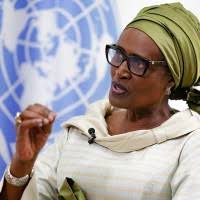
The UNAIDS Executive Director, Winnie Byanyima, stated that the funding would provide life-saving support for millions of people in partner countries while ensuring that global HIV programmes remain efficient, data-driven, and results-oriented.
She clarified: “US President Donald Trump signed the consolidated spending package into law on 3 February 2026 which allocates US$ 4.6 billion to bilateral HIV support through the America First Global Health Strategy, US$ 1.25 billion to the Global Fund to Fight AIDS, Tuberculosis and Malaria and US$ 45 million to UNAIDS.
- Advertisement -
“I thank President Trump and the US Congress for their continued commitment to HIV and global health. This US investment will provide life-saving support for millions of people in partner countries and help to ensure that the global HIV response remains efficient, data-driven and delivers results”, the health expert added.
She stated that the package would support the America First Global Health Strategy and emphasizes achieving UNAIDS’ 95-95-95 targets, a framework aimed at ending AIDS as a public health threat by 2030.
Over the past years, the United States has been the world’s largest contributor to the global HIV response through interventions like the President’s Emergency Plan for AIDS Relief (PEPFAR), support for the Global Fund to Fight AIDS, Tuberculosis and Malaria, and contributions to UNAIDS.
For instance, since its launch in 2003, the PEPFAR has provided over exceeding US$120 billion for AIDS intervention, saving more than 25 million lives and preventing millions of new infections in more than 50 countries.
However, the United States’ funding interventions stopped in early 2025 when the Donald Trump’s administration introduced sweeping changes, through an executive order by him, to its foreign aid framework.




