

….Promises Timely Publication Of Future BIRs
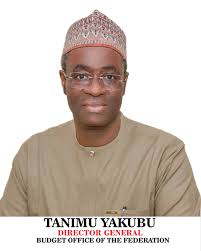
The Budget Office of the Federation has assured Nigerians and other stakeholders in Nigeria’s public finance system of its commitment to transparency and timely reporting of yearly Budget Implementation Reports (BIRs), promising that the 2024 Budget Performance Report will be published next month.
The Office, in a statement issued on Friday in reaction to recent media reports on the delayed BIRs, attributed the delay in publishing Budget Implementation Reports (BIRs) since Q2 2024 as part of its efforts to ensure accuracy during Nigeria’s transition to an extended fiscal framework.
Specifically, it stated that the delay in publication was due to two key factors, namely Verification and Reconciliation Processes – BIRs are not merely accounting summaries; they integrate expenditure data with physical verification of projects nationwide. These verification missions and reconciliations with implementing agencies took longer than anticipated, given the scale and geographic spread of appropriated projects.
- Advertisement -
In addition, the Office linked the delay to Transition to an Extended Fiscal Framework, noting that even before the extension was formally passed, policy discussions were already pointing toward a lengthened budget horizon.
According to it, issuing reports on the old cycle, only to have them overtaken by a revised implementation framework, would have created conflicting datasets and misled stakeholders, adding that as a result, reporting timelines were temporarily adjusted to preserve coherence and accuracy in fiscal disclosures.
The Budget Office further clarified that the Fiscal Responsibility Act (FRA) required it to publish quarterly BIRs, and acknowledged this statutory obligation and remained committed to both the letter and the spirit of the law: accuracy, timeliness, and credibility in public finance.
It, therefore, urged stakeholders to see the temporary delay not as backsliding, but as a reflection of the care taken to ensure accuracy, coherence, and credibility in Nigeria’s fiscal reporting during an exceptional budget cycle.
The Office assured that a full-year 2024 Budget Performance Report will be released by end-September 2025, alongside consolidated Q1–Q2 2025 reports, after which quarterly publications will resume on schedule.
It also hinted that it was strengthening monitoring systems and digital integration to guarantee future reports are timely, credible, and of the highest integrity while reaffirming its commitment to transparency, accountability, and timely disclosure in fiscal reporting.
On the way forward, the Budget Office stated that to bridge the gap in BIRs, and restore predictability, it maintained that a provisional Budget Performance Report for FY 2024 will be released by the end of September 2025, adding that this interim publication, based on verified funding commitments, will provide a reliable snapshot of fiscal performance while detailed project-level verification continues through 2025.
It further assured: “Beginning with Q3 2025, all BIRs will be published on schedule in line with FRA requirements. For Q1 and Q2 2025, which are already past due, the Budget Office will release consolidated reports alongside the full-year 2024 update, thereby restoring compliance with statutory timelines.
“The Budget Office is enhancing monitoring systems, deepening collaboration with MDAs, and expanding digital integration of expenditure and project data to ensure future reports are both timely and of the highest integrity”, the Office added.
On its broader commitment to financial system transparency and accountability, it maintained that the Federal Government remained resolutely committed to upholding Nigeria’s credibility with citizens, markets, and partners by publishing credible, accurate data; restoring timeliness and predictability in fiscal reporting, anchoring the budget process firmly on a January–December cycle; and continuous improvement in fiscal monitoring, transparency, and accountability.




