

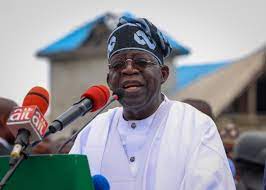
President Bola Tinubu on Monday disclosed that his administration had been committing savings from the removal of fuel subsidy on infrastructure projects and other critical areas of need for broad-based development and improved wellbeing of the citizenry.
The President, who made this remark at the commencement of a national conference on Public Accounts and Fiscal Governance, organised by the Public Accounts Committees of the Senate and House of Representatives, reiterated the commitment of his administration to deploy adequate funding to critical sectors of the economy in order to rebuild public trust in governance and promote inclusive development of the country.
Represented at the forum by the Minister of State for Finance, Doris Uzoka-Anite, the President explained that the removal of the subsidy, though painful, was aimed at revamping the economy for the benefit of Nigerians.
He said: “In 2022 alone, Nigeria spent over N4tn on fuel subsidies, more than we allocated to capital expenditure. This was not only physically unsustainable, but it was also unjust. A subsidy that disproportionately benefited the affluent, encouraged smuggling, and bred inefficiency was neither equitable nor strategic.
- Advertisement -
“Since its removal, we have redirected those funds into targeted interventions, expanding our social safety nets, improving public transportation, and financing critical infrastructure projects. Most importantly, we have strengthened our fiscal buffers, making Nigeria more resilient to external shocks.
“For far too long, Nigeria’s economy has been burdened by structural inefficiencies, fiscal leakages, and an overreliance on oil revenues. But we are not here today to dwell on the challenges of the past. We are here to chart a new course”, Tinubu added.
He maintained that recently enacted tax laws would simplify compliance, expand the tax base, make collection easier, and enhance the ease of doing business in the country, stressing that the “reforms are designed to widen the tax base by integrating the informal sector, simplify compliance for small and medium-sized enterprises, digitise revenue collection to reduce human interference and eliminate leakages, and harmonise multiple taxes to make doing business easier in Nigeria.”
The President described the new tax system as a governance imperative, saying that with the new fiscal laws his administration is laying the foundation for a self-sustaining economy that will reduce the current dependence on oil revenues to a more diverse and inclusive revenue base.
Tinubu cited some of the administration’s new initiatives such as the National Credit Guarantee Company, which aims to support local production, empower SMEs, and boost non-oil exports, as part of the efforts aimed at boosting the growth of the economy, adding that “these efforts go beyond mere economic metrics. They are creating jobs, fostering innovation, building economic resilience, and strengthening our national security and long-term stability.”
He also highlighted the Central Bank of Nigeria’s (CBN’s) monetary policy measures to in stabilize the Naira exchange rate at the foreign exchange (FX) markets, moderating inflation rate, and collaboration y with the fiscal authorities to sustain the economy on the path of sustainable growth.
Noting that there is now better coordination between the fiscal and monetary sides, Tinubu reiterated his administration’s determination to reduce inflationary pressures by addressing structural bottlenecks, particularly in food supply chains.
To improve fiscal prudence, the President urged the National Assembly, especially the Public Accounts Committees, to uphold their constitutional duty with integrity, courage, and independence, stressing that oversight is not a political tool but a patriotic duty as every project must be guided by value for money, and every budget must reflect the priorities of the governed.
Speaking at the forum the Senate President, Sen. Godswill Akpabio, charged the Public Accounts Committees of the two chambers of the National Assembly to assert their constitutional powers in enforcing transparency and accountability in the nation’s public finance system.
The lawmaker, who was represented by Sen. Abdul Ningi, said: “The Public Accounts Committees are not just legislative creations, they are constitutional bodies empowered by Sections 80, 81, and 88 of the Constitution to act as watchdogs of public funds. They have the power to summon any individual, public or private, to account for the use of government resources. “
While lamenting the failure of some agencies and individuals to resond to summons from the legislature, Akpabio described the act as an affront to democracy and the rule of law.
He clarified: “Refusal to honour legislative invitations, especially from the PACs, is unacceptable. This trend must be stopped. Heads of agencies, including the Head of Service and others, must recognise the authority vested in the legislature by the 1999 Constitution as amended.
“It is your duty to track how revenues are collected, stored, appropriated, and implemented. Without accountability, there will be no prosperity. Without discipline, there will be no development”, Akpabio added.




