

The Association of Nigerian Electricity Distributors (ANED) has decried Nigeria’s low power generation currently hovering around 5,500 megawatts despite the nation’s abundant unexplored gas reserves in the oil fields nationwide..
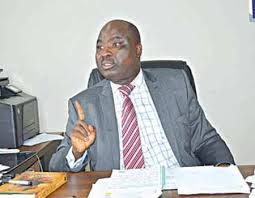
The Executive Director of Research and Advocacy of the association, Sunday Oduntan, expressed the group’s position in his paper recently delivered during a retreat organised by the Senate Committee on Power recently in Uyo, Akwa Ibom.
The industry top player lamented that a country of about 237.5 million people and the sixth largest oil-producing country in the world with a significant gas reserve that can last 100 years was still generating an average of 5,500MW (from two sources)”
Noting that based on industry standards that power generation should be 1,000 megawatts per 1 million people, Oduntan cited the example of South Africa, which is less endowed and with a population of 64.7 million people, as generating an average of 52,000MW (from six sources) with a winter peak demand of about 27,000MW.”
- Advertisement -
This is even as he pointed that the Manbilla Power Plant contract, Nigeria’s largest hydropower plant with 3,050MW, which was awarded in 1982 at $5.8 billion still remained uncompleted even till now.
He said: “Without resolving the issue of power, Nigeria will remain underdeveloped, with no major industrial or agricultural development. Many artisans will remain Okada riders without stable electricity. You, our leaders at the highest level, must articulate and implement clear-cut programmes and policies that can put the nation first. Enough of political statements.”
The ALG scribe listed some of the major challenges undermining Nigeria’s power sector as including low access rates, inadequate generation capacity, weak infrastructure, funding challenges, and regulatory gaps.
According to him, over 85 million Nigerians (43 per cent of the population) still lack access to grid electricity as of the end of April this year.
Oduntan disclosed that though the installed capacity currently stood at approximately 13,000MW, the actual output is often below 5,000MW due to constraints associated with gas supply, maintenance, transmission, obsolete infrastructure and high transmission losses, amongst others.
In addition, he maintained that inadequate funding and inability of the government to attract more private investments, inconsistent policies, regulatory uncertainty, and lack of coordination, and collaboration among stakeholders were responsible for the lingering power deficit.
have decried Nigeria’s low power generation currently hovering around 5,500 megawatts despite the nation’s abundant unexplored gas reserves in the oil fields nationwide..
The Executive Director of Research and Advocacy of the association, Sunday Oduntan, expressed the group’s position in his paper recently delivered during a retreat organised by the Senate Committee on Power recently in Uyo, Akwa Ibom.
The industry top player lamented that a country of about 237.5 million people and the sixth largest oil-producing country in the world with a significant gas reserve that can last 100 years was still generating an average of 5,500MW (from two sources)”
Noting that based on industry standards that power generation should be 1,000 megawatts per 1 million people, Oduntan cited the example of South Africa, which is less endowed and with a population of 64.7 million people, as generating an average of 52,000MW (from six sources) with a winter peak demand of about 27,000MW.”
This is even as he pointed that the Manbilla Power Plant contract, Nigeria’s largest hydropower plant with 3,050MW, which was awarded in 1982 at $5.8 billion still remained uncompleted even till now.
He said: “Without resolving the issue of power, Nigeria will remain underdeveloped, with no major industrial or agricultural development. Many artisans will remain Okada riders without stable electricity. You, our leaders at the highest level, must articulate and implement clear-cut programmes and policies that can put the nation first. Enough of political statements.”
The ALG scribe listed some of the major challenges undermining Nigeria’s power sector as including low access rates, inadequate generation capacity, weak infrastructure, funding challenges, and regulatory gaps.
According to him, over 85 million Nigerians (43 per cent of the population) still lack access to grid electricity as of the end of April this year.
Oduntan disclosed that though the installed capacity currently stood at approximately 13,000MW, the actual output is often below 5,000MW due to constraints associated with gas supply, maintenance, transmission, obsolete infrastructure and high transmission losses, amongst others.
In addition, he maintained that inadequate funding and inability of the government to attract more private investments, inconsistent policies, regulatory uncertainty, and lack of coordination, and collaboration among stakeholders were responsible for the lingering power deficit.




