

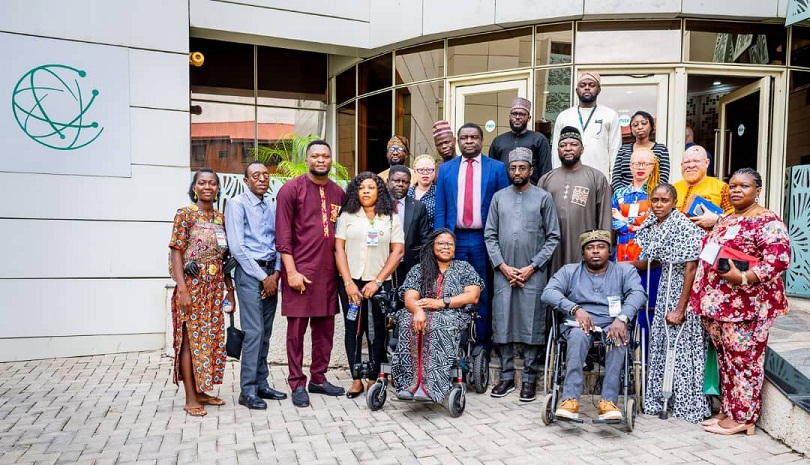
The Director General of the National Information Technology Development Agency (NITDA), Kashifu Inuwa, has advocated for increased inclusion of persons with special needs in the agency’s policies and programmes.
Inuwa made the call in furtherance of the agency’s drive towards the implementation of the Presidential priority area of Reforming the Economy for Sustained Inclusive Growth, stressing that the move aligns with the agency’s initiatives to address the needs of an estimated 35 million Nigerians with special needs.
Making this known during a strategic meeting with a delegation from the Inclusive Friends Association, a disability advocacy group, led by its Executive Director, Grace Jerry, at the agency’s headquarters in Abuja, the Director-General thanked the group’s leaders for their determination in bringing the realities of the community to the agency’s attention.
According to him, the visit brings to his attention the need to be more intentional in the way the NITDA is designing its programmes because there is no way it can achieve 95% digital inclusion if the agency excludes 35 million Nigerians.
- Advertisement -
While noting that the agency has always been conducting targeted training for people with special needs in various parts of the country in the past, Inuwa assured the group of the agency’s renewed commitment to expanding the initiatives to all parts of the country.
He explained: “If you look at our office, we have facilities to cater for that and in our recruitment also, we make sure we take care of that. But now, we must go further and make sure our programs reflect this inclusion.”
The Director-General proposed that representatives from the disability community be formally included in committees that develop national ICT standards, training curricula, and policy frameworks, noting that their presence would not only represent their interests but strengthen implementation by pushing beyond government bureaucracy.
This is even as he further suggested the need to explore other avenues to integrate special needs considerations into national initiatives such as the NYSC tech programmes, women’s training cohorts, and upcoming national tech conferences. These platforms, he noted, provide valuable opportunities for networking, skills development, and enterprise support.
Inuwa maintained” “For us, it’s beyond just training. The real goal is empowerment, how we can train people to use IT to expand their businesses and improve their lives? Whatever you do, you need IT as a tool. So, let us make sure everyone, regardless of ability, is equipped to use it.”
Earlier in her remarks, Ms Jerry thanked the agency’s management for hosting the group them and highlighted a significant divide within the disability community, particularly among women in northern Nigeria.
She emphasised the urgency of ensuring that the government’s ambition of achieving 95% digital literacy by 2030 is truly inclusive by ensuring adequate representation of people living with special needs in ongoing reviews and monitoring of the framework’s implementation.
While stressing the need for inclusive representation of their community in tailored programmes and collaborative policymaking, she noted that “digital literacy is fast becoming a foundational skill for employment and without deliberate inclusion, millions will be left behind.”




