
A new International Labour Organization (ILO) brief released on the occasion of International Women’s Day has indicated that 30 years after the Beijing Declaration and Platform for Action set out an ambitious agenda for equality, women still continued to face significant barriers in the global economic system.
The release titled ‘Women and the Economy: 30 Years after the Beijing Declaration’ revealed that
despite employment gaps between women and men narrowing from 27.1 to 23.1 percentage points since 1991, women’s employment rates remained far below men’s, with only 46.4 per cent of working-age women employed in 2024, compared to 69.5 per cent of men.
The labour organization noted that at the current pace of progress, achieving equality in employment rates would take almost two centuries.
- Advertisement -
According to the report’s findings, while more young women are pursuing education and training, this has not translated into significant labour market gains. Women hold just 30 per cent of managerial positions globally, with only a modest improvement over the past two decades.
The report further reflected that women continued to be over-represented in low-paid sectors like nursing and childcare, while men dominate fields like transport and mechanics even as they also continue to face lower average earnings and fewer paid working hours globally and are overrepresented in informal employment in low- and lower-middle-income countries.
On the other hand, the ILO reported that there had been progress in narrowing the earnings gap between women and men: annually, employed women (including both employees and the self-employed) earned 77.4 cents for every dollar earned by men in 2024, still a significant gap, but an improvement from 70.1 cents in 2004.
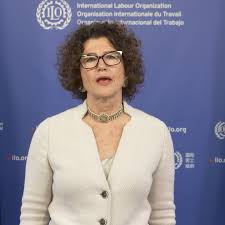
Commenting on the gender gap situation in the economy, Director of the ILO Conditions of Work and Equality Department, Sukti Dasgupta, said: “Three decades since world leaders gathered in Beijing and pledged to advance the rights of women worldwide, significant challenges remain in fulfilling the Beijing Declaration.
“While progress has been made, millions of women still face persistent barriers to entering, remaining and advancing in decent work. Urgent reforms are needed to address unequal care responsibilities, wage gaps between women and men, and violence and harassment in the world of work, factors which continue to make workplaces more unequal and less safe for women,” she added.
The brief presents global trends in employment and working conditions for women and men, highlighting persistent inequalities, often exacerbated by factors such as migrant and disability status.
It also underlines systemic barriers to women’s employment opportunities and decent working conditions, which stem from deeply rooted structural inequalities, discriminatory social norms, and economic policies that fail to account for the different needs of women and men.
The ILO further noted that as a cornerstone of global efforts towards the empowerment of women, the Beijing Platform for Action remained a powerful force in shaping policies and laws that foster social and economic progress worldwide, stressing that amid digital, environmental, and demographic transitions, its vision is more relevant than ever.