

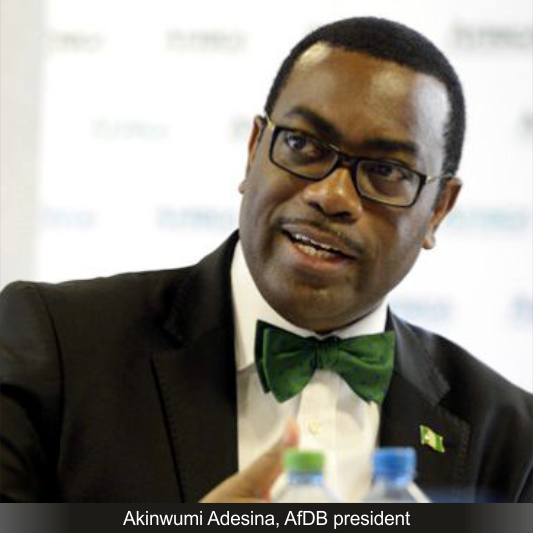
President of the African Development Bank (AfDB), Dr. Akinwumi Adesina, has assured that Nigeria will significantly benefit from a $4.4 billion investment being disbursed by the bank to expand the first phase of the Special Agro-Industrial Processing Zones (SAPZs) across all 36 states and the Federal Capital Territory (FCT).
The development finance expert, who gave the assurance when he featured in Arise TV programme on Monday, noted that agricultural transformation remained crucial to the Nigerian governments’ efforts targeted at fostering economic growth in the country.
According to him, transformation without agricultural transformation is incomplete because agriculture touches the lives of people at the grassroots level.
Adesina clarified that the SAPZs initiative, which was initiated in 2022 to transform the agricultural sector by establishing agro-processing clusters in African countries, seeks to create economic zones located near farmers, supported with critical infrastructure, including power, water, roads, digital connectivity, and irrigation systems.
- Advertisement -
He explained these zones would attract companies that will purchase raw materials from farmers for processing, thereby creating a new ecosystem of wealth in rural economies.
Available data from the bank indicated that the AfDB had already committed over $3 billion to SAPZs’ projects across 11 African countries.
For instance, in Nigeria the initial plan was to raise $750 million for the implementation of the programme, but this figure has significantly been exceeded, with the figures rising to $4.4 billion.
Adesina expatiated: “We initially put together an $851 million programme with the Islamic Development Bank and the International Fund for Agricultural Development. At the Africa Investment Forum last December, I engaged Nigerian governors in raising more funds. We started with a target of $750 million but eventually secured $2.2 billion, which later grew to $4.4 billion.”
He expressed optimism that the SAPZs programme would enable Nigeria to process more of agricultural produce locally, closing long-standing infrastructure deficit gap that has over the years compelled farmers to be transporting raw commodities to urban areas for processing.
The banker assured: “This model is already working successfully in several African countries, and I have no doubt it will succeed in Nigeria.”




